By the Artixium technical team · Updated 16 October 2026
Virtual advertising replaces, in the TV broadcast, the messages shown on pitch-side LED boards. Fans in the stadium see one advert, while each country broadcasting the match can see another. Artixium pairs this technology with its Neipatec range of perimeter boards.
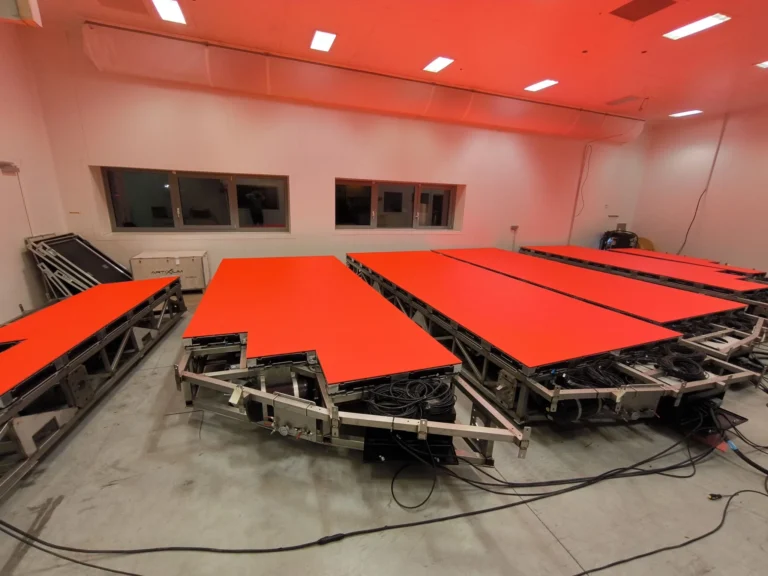
The range includes three products: PS10.4a-S/T, PS10.5-S/T and PS12.5-S/T.
What Do Neipatec Boards Offer?
Enhanced Black Face (EBF) LEDs, which boost contrast and keep brand colours accurate.
A pixel pitch of 10 mm, 12.5 mm, or asymmetric 10 mm (V) × 12.5 mm (H).
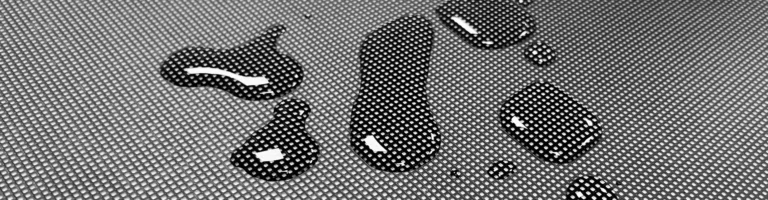
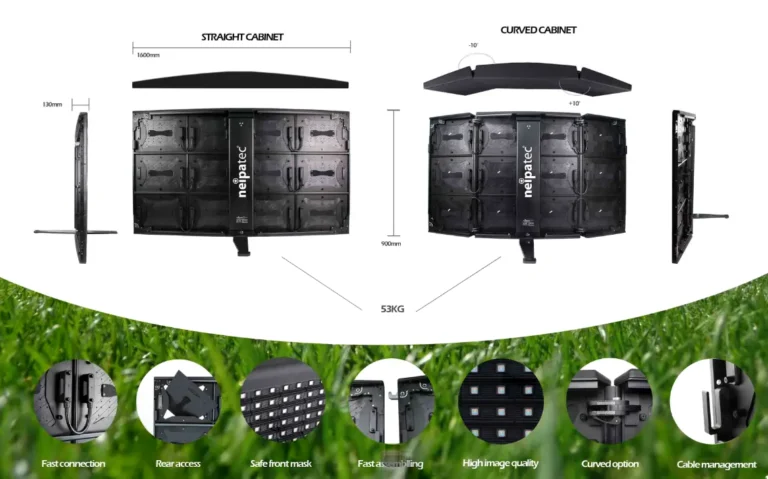
A cabinet rated IP65 front and rear, cooled without fans: neither rain, sprinkler water nor dust gets in, which limits electronic failures.
A weight of 28 kg/m², about half the current industry standard, which makes logistics and installation easier.
A rear with no exposed cables: nothing for ball boys or photographers to unplug.
Full specifications are on the Neipatec ST page.
How Does Virtual Advertising Work?
Virtual advertising software is part of Artixium’s sports solutions. During a live broadcast, it replaces the adverts on the perimeter boards with other content in the feed sent to broadcasters. One match can carry several campaigns, and each sponsor can target the audience of a specific country.
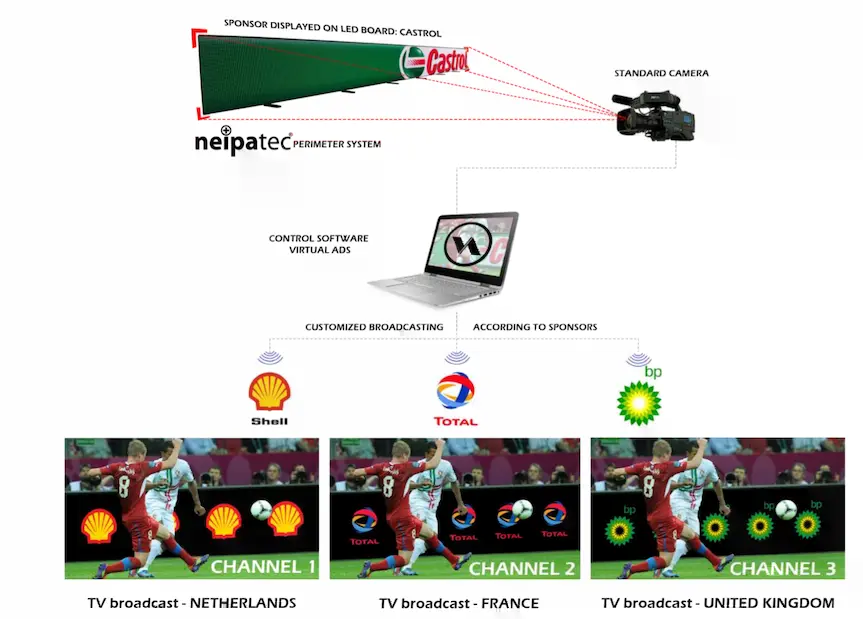
The technique relies on keying. The software isolates a colour or brightness level in the image and makes it transparent, so that another image shows through in that area.
What Are the Benefits for Clubs and Sponsors?
For a club, the same advertising space can be sold several times, to advertisers in different countries. For a sponsor, the message adapts to the market watching the match, in its language and with its offer. Inside the stadium, nothing changes for the crowd.
Virtual advertising does require coordination with broadcasters, who need to include the modified feed in their production.
What Are the Limits of Virtual Advertising?
Virtual advertising only reaches TV viewers. The real boards keep showing their own programme for the crowd on site, which also has to be sold or scheduled.
It requires an agreement with each broadcaster and, depending on the competition, compliance with the organiser’s rules. Check these points before selling advertising space country by country.
How Does a Virtual Advertising Project Run?
It starts with the club or organiser, who defines the target markets with its commercial partners. Broadcasters are involved from the outset, since they receive the modified feed.
Then comes the technical preparation. The perimeter boards must stay stable on camera, and the content for each market is prepared in the right format. Tests in match conditions check the keying before the first broadcast.
During the season, every match follows the same pattern: the stadium shows its own programme, and each TV feed carries the messages planned for its country.
What Content Should You Plan for Each Market?
Each broadcast country gets its own version: language, offer, sometimes a different brand. Plan visuals that read in a few seconds, with high contrast, because the boards are seen from afar and often in motion on screen. Our guide to LED display content sets out the basic rules for visuals that stay sharp on camera.
Frequently asked questions
Can virtual advertising be seen inside the stadium?
No. The replacement happens only in the feed sent to broadcasters. Fans on site see what is actually shown on the boards. Wikipedia describes virtual advertising in general.
Which LED boards does virtual advertising need?
Boards that look sharp and stable on camera, with good contrast and a high refresh rate. Neipatec ST reaches 7680 Hz. Our guide to the LED refresh rate explains why this matters on camera.
Is the Neipatec cabinet available in a curved version?
Yes, it comes in straight and curved versions, to follow the shape of stands and corners.
Where are Neipatec boards installed?
Among other places at Anfield, Liverpool FC’s stadium, where they have been in place for ten years, and at US Thionville. See the Anfield reference and the news story about US Thionville.
What is keying?
It is a compositing technique: one colour or brightness in the image turns transparent to reveal another image. It is common in television, for example with green screens.