Digital billboard LED displays
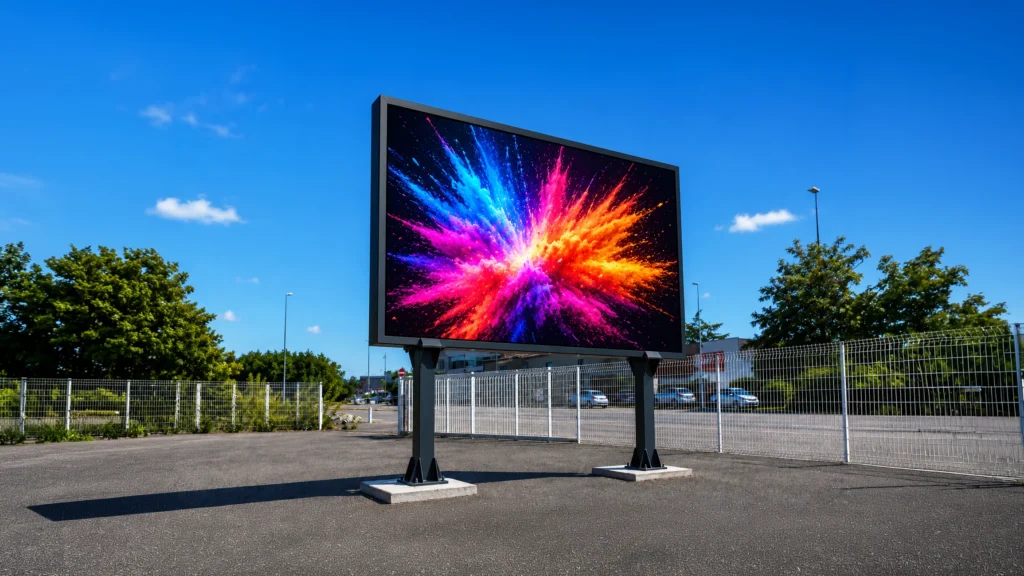
A digital billboard carries a campaign in public space: it must stay readable in direct sunlight, dim at night and show different content from one site to the next. Artixium designs roadside billboards, unipoles, totems and media facades for LED and DOOH advertising networks.


Which LED displays for advertising?
Applications show where Artixium DOOH solutions create visibility: advertising networks, retail spaces, transport hubs and public venues.
LED Billboards
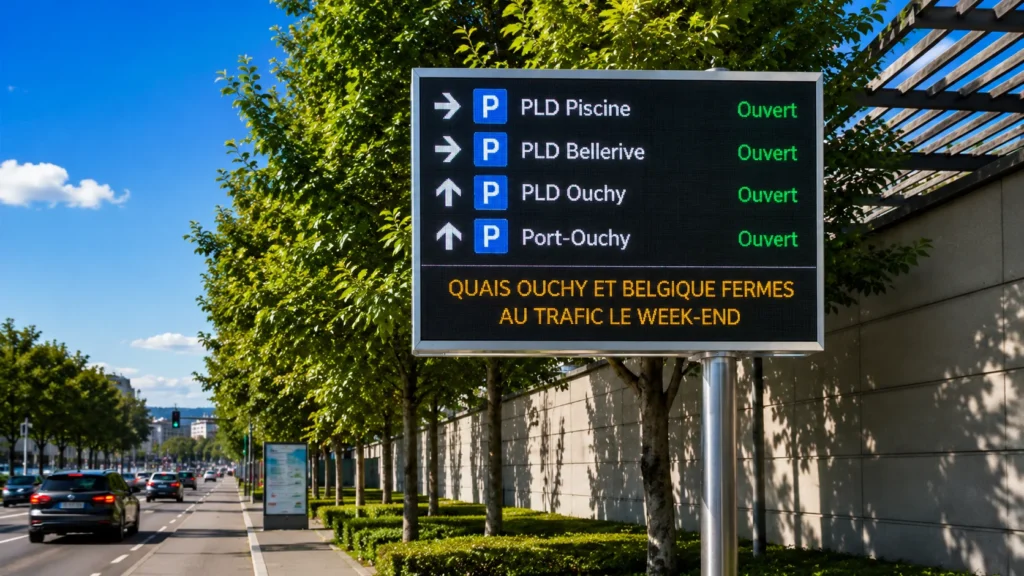
Deploy high-impact LED screens on roadside locations, commercial zones and premium urban sites with brightness, contrast and weather resistance adapted to public environments.
A roadside billboard is read at speed from between thirty and a hundred metres, which sets a coarse pitch across a very large surface. The harder constraints are legal rather than optical: most municipalities cap night-time luminance, so the screen needs a real dimming range and an ambient sensor to take it from full sun down to a few hundred nits after dark.
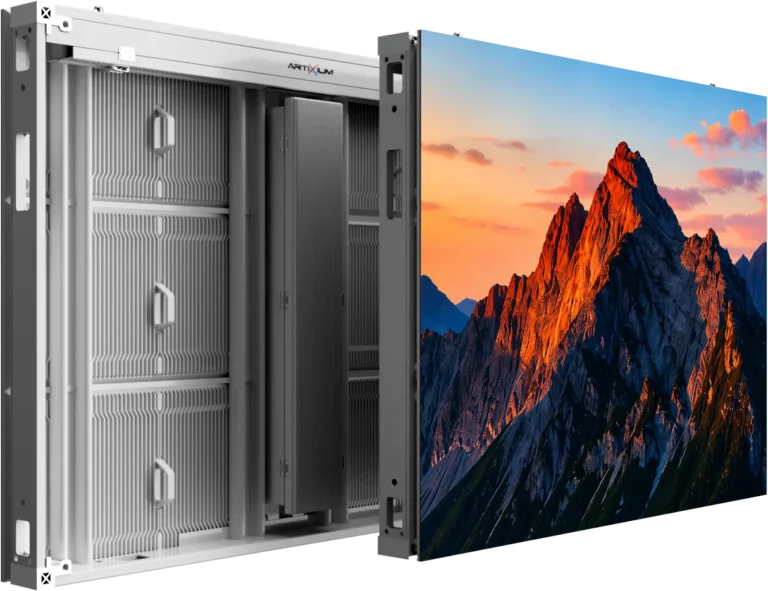
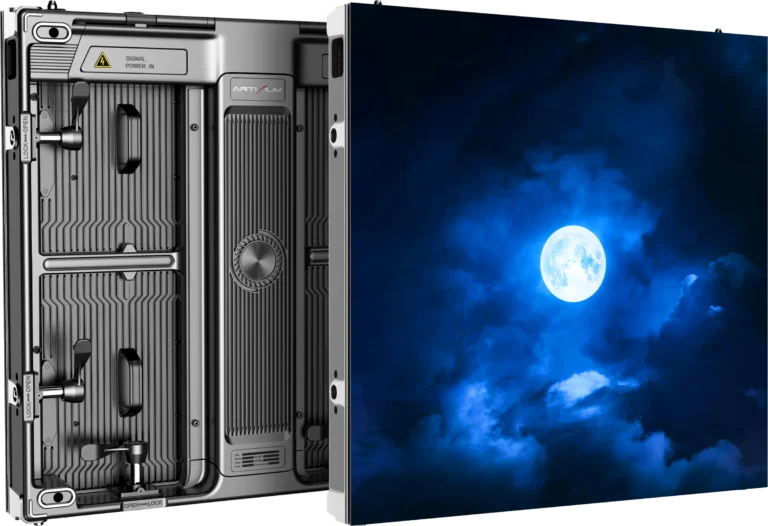
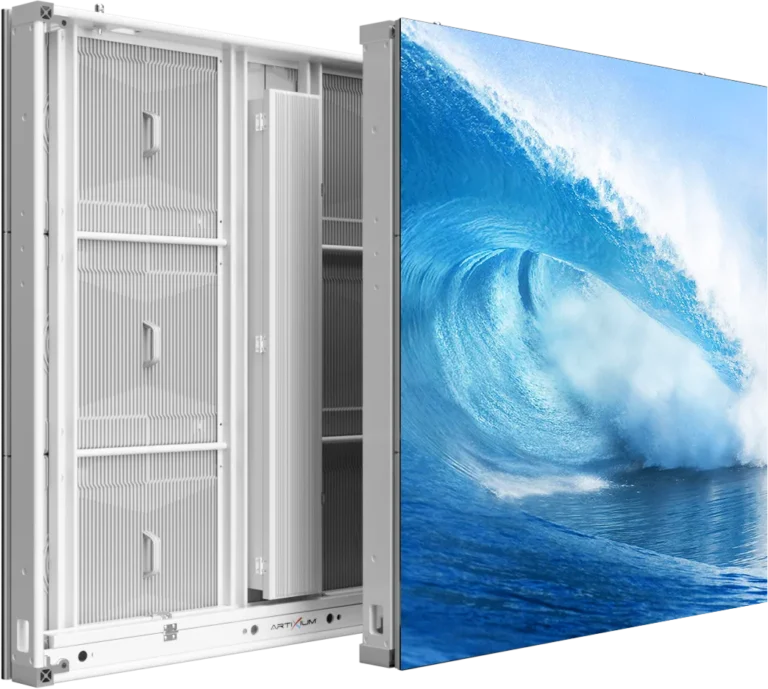
We build these on outdoor cabinets such as the Cobalt and Thorite 3: IP-rated structures meant to stay on a mast for a decade, serviced from the front because there is rarely access behind.
Urban LED Displays
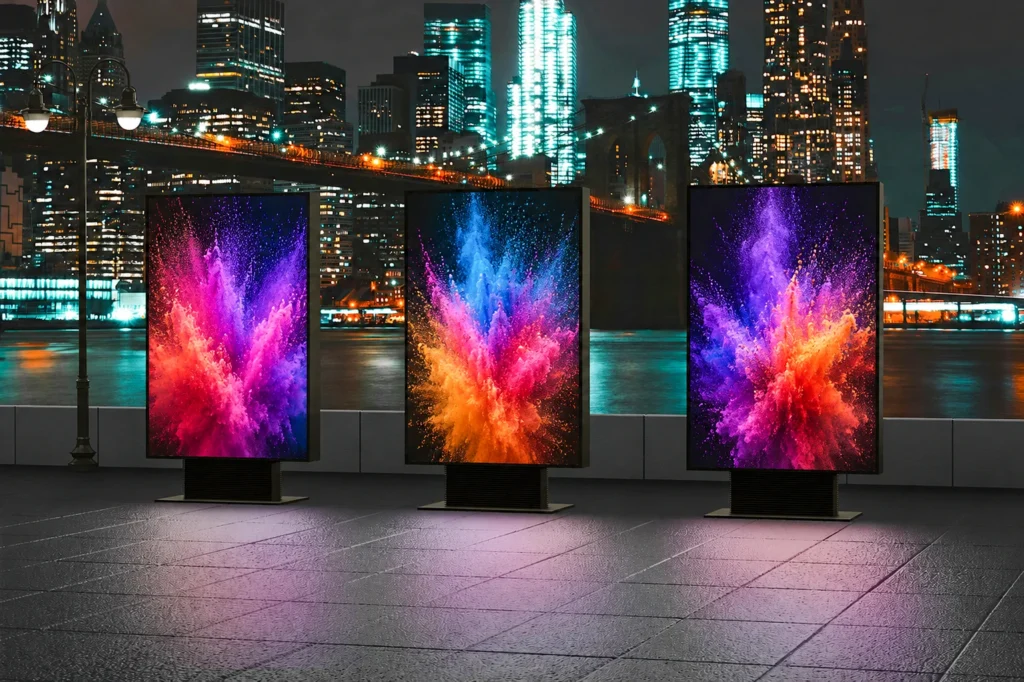
Compact and durable LED displays bring campaign content, public information and cultural programming into streets, plazas and high-footfall city environments.
Street-level screens are read from a few metres by people on foot, so the pitch is far finer than a billboard’s and the finish counts: passers-by touch them, lean on them and photograph them. Vandal resistance, concealed cabling and a sealed base belong in the specification from the start.
They also answer to the streetscape. Housing colour, depth and the way the unit meets the pavement are usually agreed with the city before anything is manufactured, which makes most of these custom builds around a standard cabinet, normally the Cobalt or the Thorite 3, both serviced from the front, which matters when the only access is from the pavement.
LED Totems
Vertical LED formats create compact, visible display points for public spaces, retail destinations, transport areas and brand environments.
A totem is a vertical, often double-sided display with a small footprint and no spare volume inside for airflow, so thermal design decides its lifespan more than the panel does. Sited at entrances, forecourts and crossings, it is read from close range by people on foot, which calls for a finer pitch than anything else on the street.
The Silicium is the cabinet we use for that: fine pitch built to stay outdoors, with the controller, power supplies and cooling housed in the base. Height, width and finish are drawn to the location, so a totem is quoted as a custom project rather than picked off a range.
LED Facades
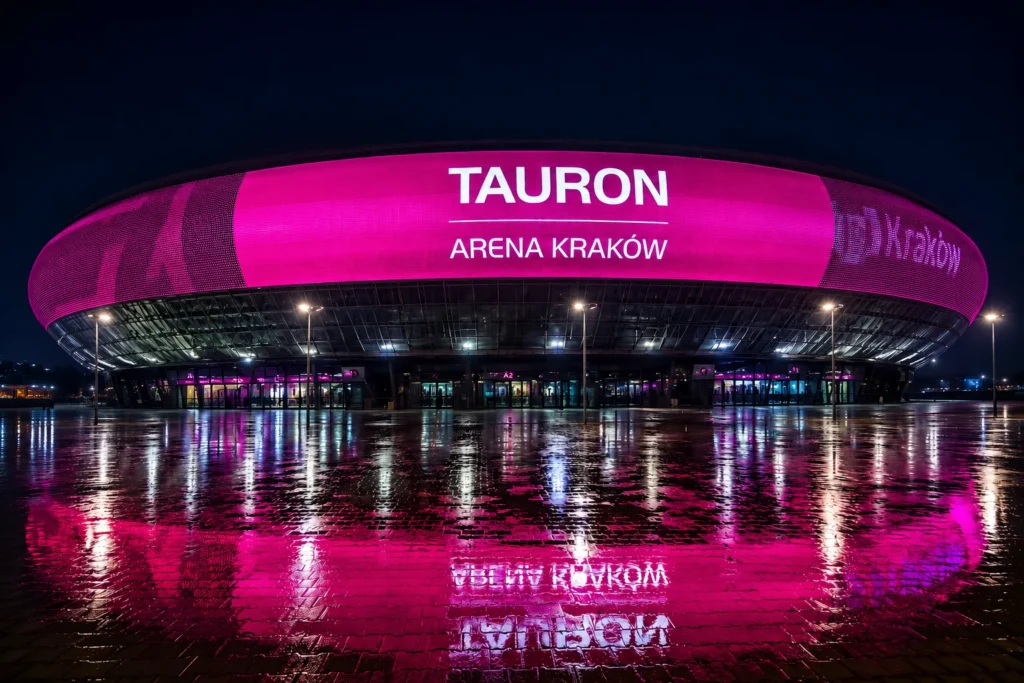
LED facade systems transform buildings into large-scale communication surfaces while accounting for structure, viewing distance, maintenance and content format.
A facade screen has to work twice: as a display at night and as part of the building during the day. Scale is the first problem (these are among the largest surfaces we build) and the second is that the fixing back to the structure has to be engineered with the building’s own engineers, for wind loads a cabinet never sees on a mast.
We build them on outdoor cabinets such as the Thorite 3 and the Cobalt, serviced from the front because there is no access behind a facade. The geometry is never standard, so the frame and the cabinet layout are drawn as a custom project.
We build LED for every kind of advertising site
Artixium manufactures LED displays for media owners, retail groups, transport operators and independent site owners, from a single forecourt totem to a network across dozens of locations.
Shopping malls
Corridor screens read at a few metres under artificial light: pitch over brightness.
Distance and light
We specify from the viewing distance and the light. A screen read at eighty metres in full sun and one read at three metres in a mall corridor share almost nothing but the word LED.
Airports
Long dwell times, premium rates, and a duty cycle that never really stops.
Roadside advertising
Read at speed from tens of metres, then dimmed at night to meet local limits.
Within the permit
We engineer to the permit. Night-time luminance limits, housing colour and the way the structure meets the ground are usually agreed with the local authority before manufacture begins.
Retail stores
Storefront and in-store surfaces that have to survive daylight through glass.
Car dealerships
Large imagery on the forecourt, fine pitch on the showroom floor.
Hotels & restaurants
Screens that read as interior finish first and advertising second.
For the whole contract term
And we build for the decade the site is under contract, not for the install week: sealed cabinets, front-access maintenance and spare stock held for the life of the network.
Public venues
Civic sites where the housing is agreed with the city before manufacture.
Need advice ?
Our digital billboard projects
Designed to be seen
DOOH is not only a screen choice. Artixium helps define the right format, brightness, pixel pitch, mounting approach, content constraints and maintenance model for each site.
34%
were influenced by LED displays when making a purchase decision. Source: OAAA / The Harris Poll
100,000h
LED lifetime for long-term display performance. Source: LED L70 lifetime standard
55%
notice LED displays more in major cities. Source: OAAA / The Harris Poll
IP68
weather-ready protection for demanding outdoor sites. Source: IEC 60529 rating
Our digital billboard products
Visit our showroom
- Plan your visit
Configure your LED screen
- Configure my screen
Frequently asked questions
Are screens exposed to sunlight still clearly visible?
Yes. High-brightness LED displays can remain visible in direct sunlight when brightness, contrast, pixel pitch and exposure conditions are properly matched to the site.
How is brightness managed at night?
Outdoor LED screens can be configured with automatic brightness control, reducing intensity in the evening and adapting output to ambient light levels and local requirements.
Do outdoor advertising displays require a permit?
Yes, in most cases. Outdoor advertising in France is governed by the Code de l’environnement and, where one exists, by the local advertising regulation (RLP) of the municipality, which sets what is allowed in terms of surface, height, luminance and operating hours, and differs from one town to the next. The site should be checked before the format is fixed. Artixium can support you through the administrative process.
Can content differ from one site to another?
Yes. A centralized content management system can schedule different campaigns by site, by region or by time slot, so a network runs day-part pricing and local campaigns while staying manageable remotely.
What is the power consumption of a LED display?
Average consumption is around 200 to 400 W/m² depending on the model, significantly less than traditional signage.
How long does installation usually take?
Timing depends on screen size, mounting structure, access and electrical preparation. Smaller indoor projects can be installed quickly, while larger outdoor sites require more planning and coordination.
How long does a digital billboard last?
The LEDs are rated in tens of thousands of hours, but service life on a roadside site is decided by the housing, the power supplies and how well water is kept out. We build for a ten-year site contract and hold spares for that period: a different specification from a screen meant to last three.
Who owns the content management system?
You do. We supply the screen and the processing and integrate with whatever CMS you already run, or recommend one if you have none. We do not lock a display to a proprietary platform: a screen that can only be driven by its manufacturer is a liability on a ten-year site.
What does an outdoor LED display cost to run?
Power is the main operating cost, and it scales with brightness far more than with size. A screen that dims properly at night uses a fraction of its daytime draw. We give a realistic consumption figure for your content and dimming schedule, not the peak-white number from the datasheet.
Tell us about your project
Location, viewing distance and permit status. We come back with a first read on format, brightness and structure.