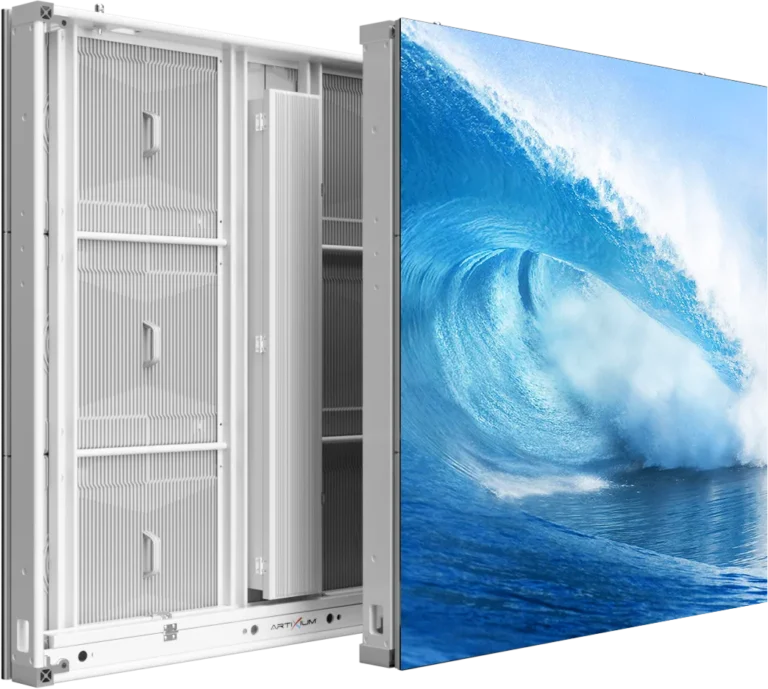
Public space LED display
A public space LED display informs the users of a town hall, a school or a square, indoors or out: it must stay readable, hard-wearing and easy for non-technical staff to run.


Which LED displays for a public space?
Artixium designs LED displays for civic buildings, street furniture and public information. Screens that belong to a community and have to survive it.
Outdoor screens
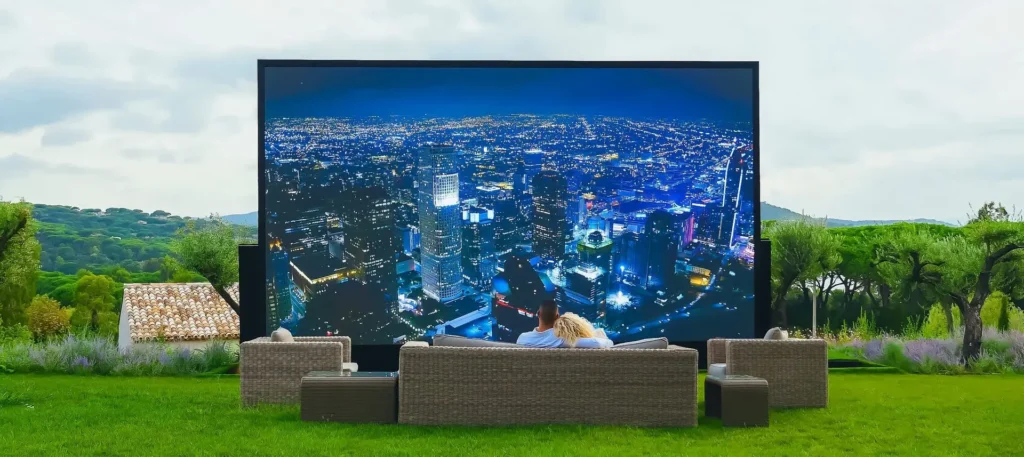
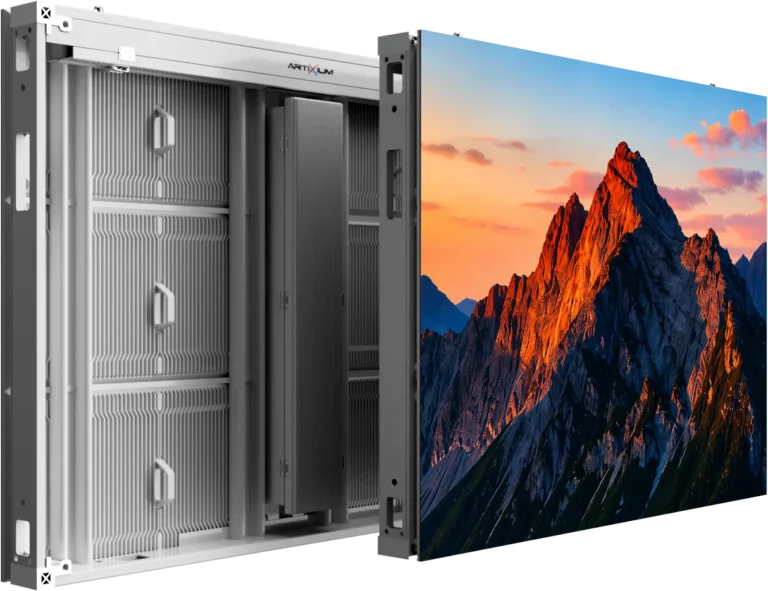
On a square or a forecourt, the screen informs passers-by and carries the authority’s messages.
It has to hold up in full sun and in the rain, respect the luminance limits set by the permit and run unattended. Brightness drops at night so it does not disturb residents.
A public space LED display also serves in an emergency: instructions, diversions, weather warnings. It is run remotely by the authority’s teams, and its cabinet is built to stay outdoors all year round.
Hall and auditorium LED walls
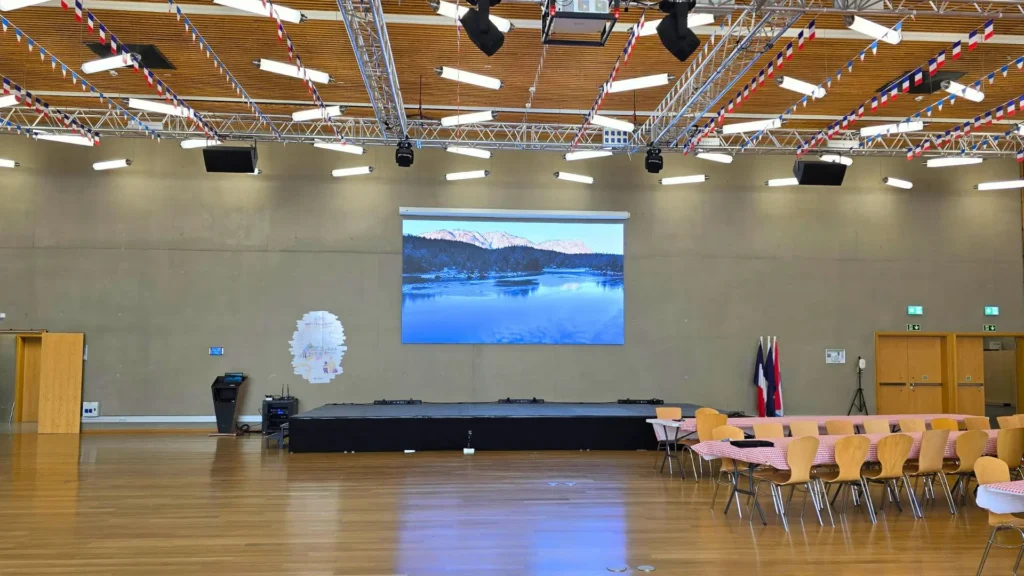
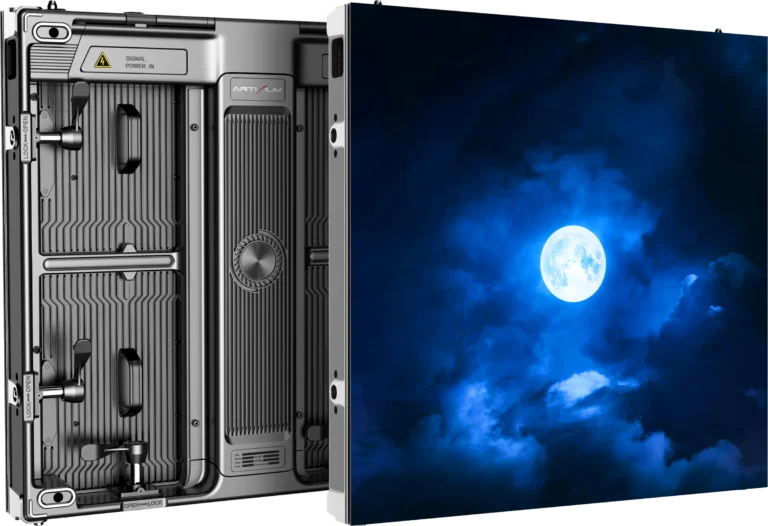
A large wall in a multi-purpose hall, a school hall or a lecture theatre, for announcements, lessons and events.
Operated by staff rather than technicians: one button, fixed inputs and a protected front. A laptop is plugged in and the image appears, with no setup.
In a lecture theatre, the wall replaces the projector and stays readable with the lights on, so the audience can take notes. The same screen serves prize-givings, public meetings and screenings.
Stage screens
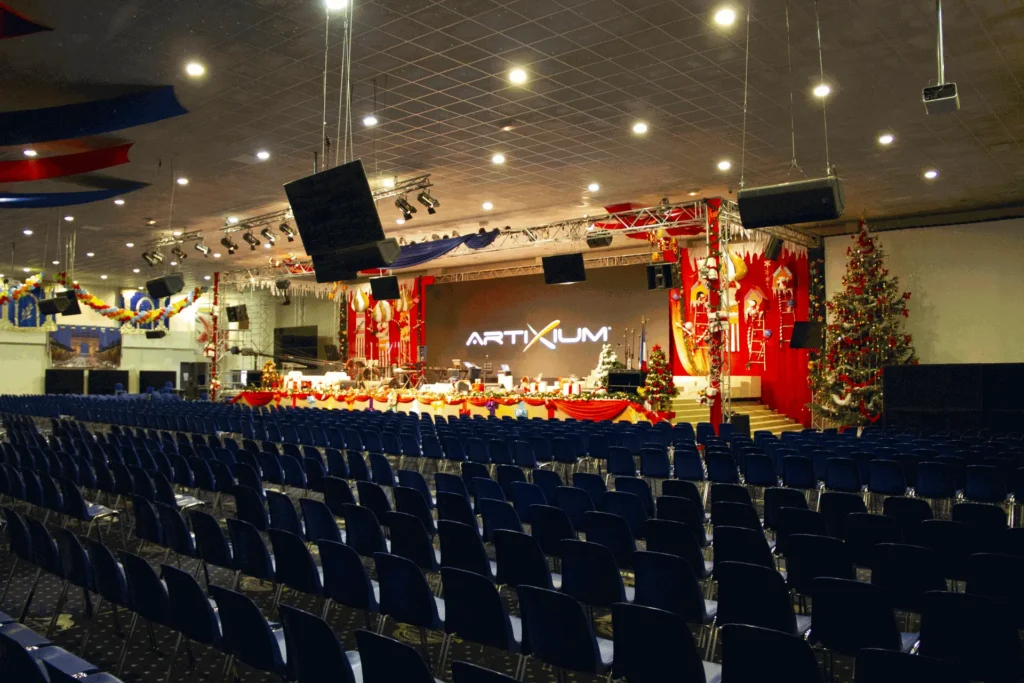
An LED stage backdrop for ceremonies, services and performances.
It has to fit the acoustics and the fabric of the building, and stay comfortable for an audience sitting close. No fan noise during a concert or a speech, and brightness set so it does not overpower the stage lighting.
In an old or listed building, the wall can stand on a free-standing structure, with no drilling into the walls, and come down if the venue returns to its original layout.
LED columns
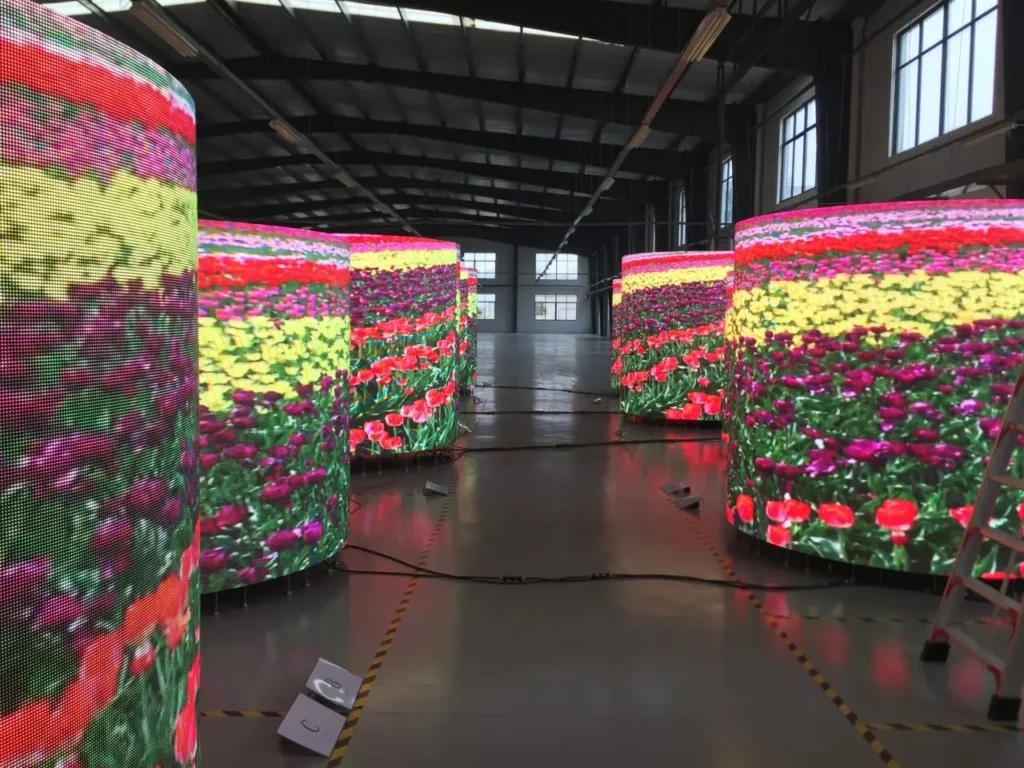
Columns wrapped in LED screens to mark an entrance, bring a hall to life or carry a campaign.
The cabinet follows the shape of the pillar, and the content reads all the way round. Corners are handled so the image runs from one face to the next without a break.
In a town hall, a library or a shopping centre, the column becomes a point for directions and information. It is scheduled remotely, like the other screens on site.
Custom LED installations
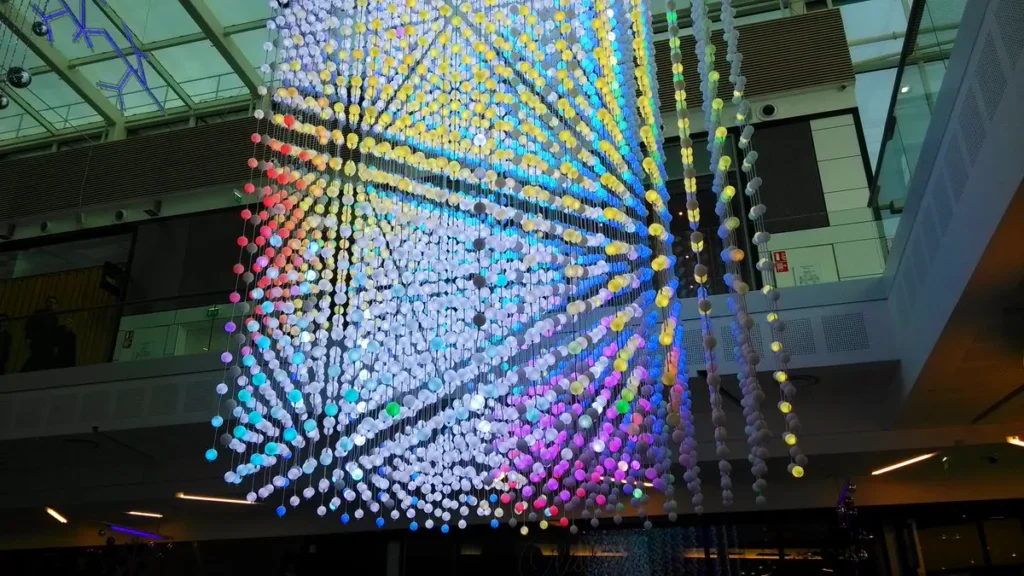
Free forms for a museum, a library or a cultural venue: suspended pieces, ribbons, volumes.
These are custom projects, drawn from the architect’s or the designer’s model. Artixium designs the cabinet around the shape, then builds and installs it.
Structure, weight and maintenance access are agreed with the client before manufacture. Content is prepared to the exact format of the installation, so the image follows the curve or the volume without distortion.
We build LED for every kind of public space
Artixium manufactures LED displays for universities, schools, municipalities, places of worship and cultural institutions: buildings that answer to the public and to a fixed budget.
Permits and buildings
We specify around the permit and the fabric. Luminance limits, operating hours and what may be fixed to a protected wall shape these projects more than the technology does.
University campus
A dozen screens, many content owners, and one emergency message.
School hall
Operated by staff rather than technicians. One button and a protected front.
Designed for staff
We engineer for staff, not technicians. One button, fixed inputs, a written procedure and training at handover, because there is rarely an AV team on site.
City plaza
A permit before a purchase: luminance limits and housing agreed first.
Place of worship
Live acoustics, protected fabric, and a congregation sitting close.
A public budget kept
And we scope to a published budget. Public money is committed once, so the quote has to hold and the spares have to still exist in five years.
Need advice ?
Our public space LED display projects
Why choose Artixium for a public space LED display?
Public buyers work to procurement rules, long horizons and non-technical staff. Artixium builds installations that fit all three.
Public tender expertise
We support public buyers on procurement processes, technical specifications and long-term frameworks.
Architectural integration
Screens designed to respect heritage buildings and public spaces, with discreet mounting and architectural finishes.
Staff training & handover
We train your team on content management and daily operation, and leave clear documentation behind.
Built to last
Field-replaceable modules and a long spare-parts commitment, so the installation outlives the budget cycle that bought it.
Our public space LED display products
Visit our showroom
- Plan your visit
Configure your LED screen
- Configure my screen
Tell us about your project
Civic building, street furniture or public information: send the site and the constraints that come with it.
Frequently asked questions
Can non-technical staff manage the content?
Yes. Content is scheduled from easy-to-use digital signage software: office staff can update announcements without calling in a technician.
Will an outdoor civic screen survive the winter?
Yes. Our outdoor screens are weatherproof and tested against rain, snow, frost and sharp temperature changes. Protection and mounting are chosen based on how exposed your site really is.
How does this fit a public procurement process?
We help public buyers write the specification and prepare the tender. Our products carry the European certifications public procurement asks for (CE, RoHS, EN 55032).
Can a screen be installed on a heritage building?
Often yes, with discreet mounting and finishes chosen with the architect. The heritage authorities have to approve it first.
How does this work with a public tender?
We are used to it. We provide the technical details, power consumption and lifetime cost a tender file asks for. We can respond directly or with your installer. Tell us the deadline and where your file stands.
What happens after the warranty ends?
We keep spare parts for the screen’s whole life and repair rather than replace. For a public body, that matters more than the purchase price: a screen that cannot be repaired after eight years means a new tender, which costs far more.
Can a screen be temporary rather than permanent?
Yes. Many local authorities start with a screen for one event or season before committing to a permanent installation, using the same equipment. It is often the most sensible option for a first budget.
Do you train our staff?
Yes, at start-up, and we leave written instructions. Training is included: most public buildings have no AV technician, and a screen nobody dares to use ends up switched off.