
Stadium LED display
A stadium LED display must stay readable from every stand, appear on camera without flicker and withstand pitch-side impacts.



Which LED displays for a stadium?
Artixium designs perimeter LED boards, scoreboards, fascia and vomitory displays, with installation support for professional sport venues. LED display solutions designed for stadium visibility, broadcast impact and live-event performance.
Perimeter systems
High-impact advertising boards designed for stadium visibility, broadcast usage and sport-specific safety constraints.
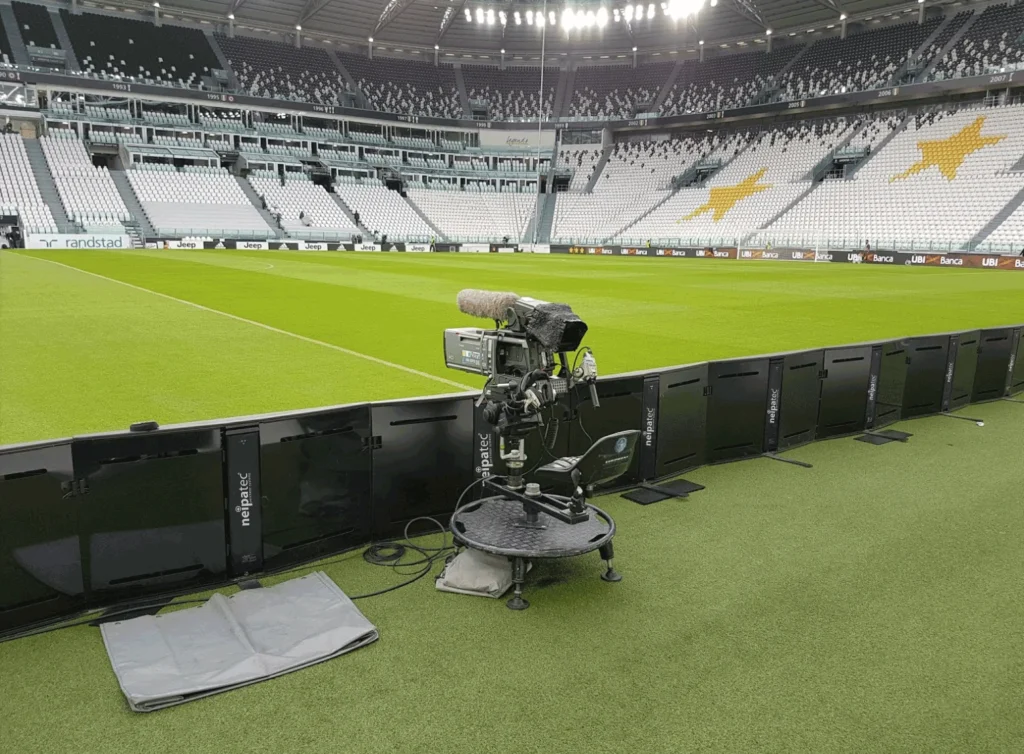
Pitch-side boards occupy the most demanding position in the venue: within a metre of players, filmed continuously, lit from above by floodlights. The cabinet has to absorb an impact without shattering and hold the regulation tilt angle, which is a structural question before it is a display one.
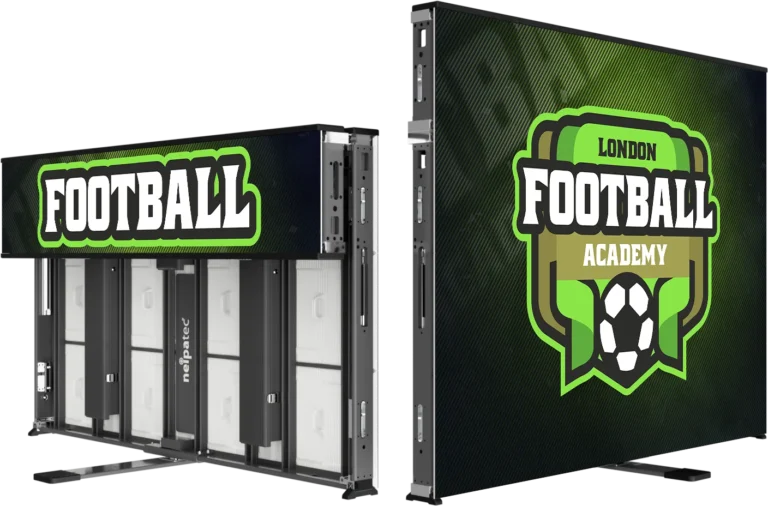
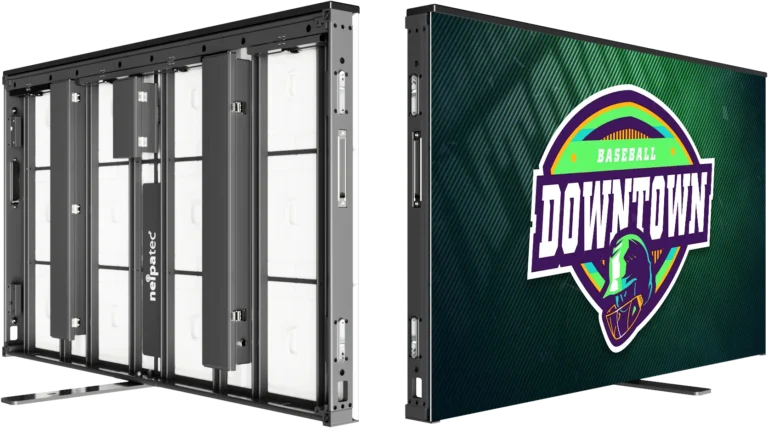
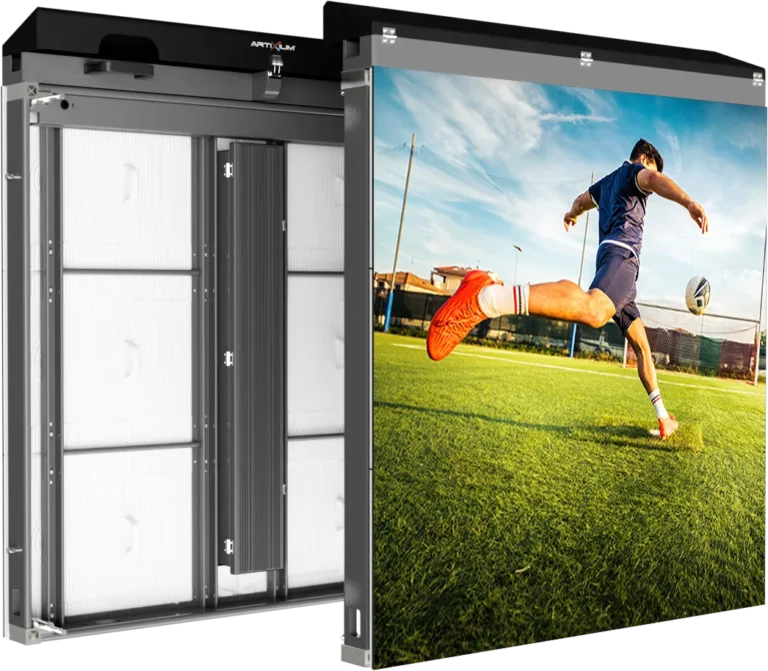
That is what the Neipatec ST is built around: a shock-absorbing perimeter cabinet whose refresh rate and scan behaviour are specified for the broadcast camera rather than for the eye, so it keeps its colour while a camera pans across it at speed.
Where the perimeter has to be read from both sides (a stand facing it, a track running alongside the boards), the Neipatec ST Duo is double-sided: one line of cabinets on the ground, two sponsor inventories to sell.
Scoreboards
Large central or wall-mounted displays for live scores, timing, replays, sponsor content and audience information.
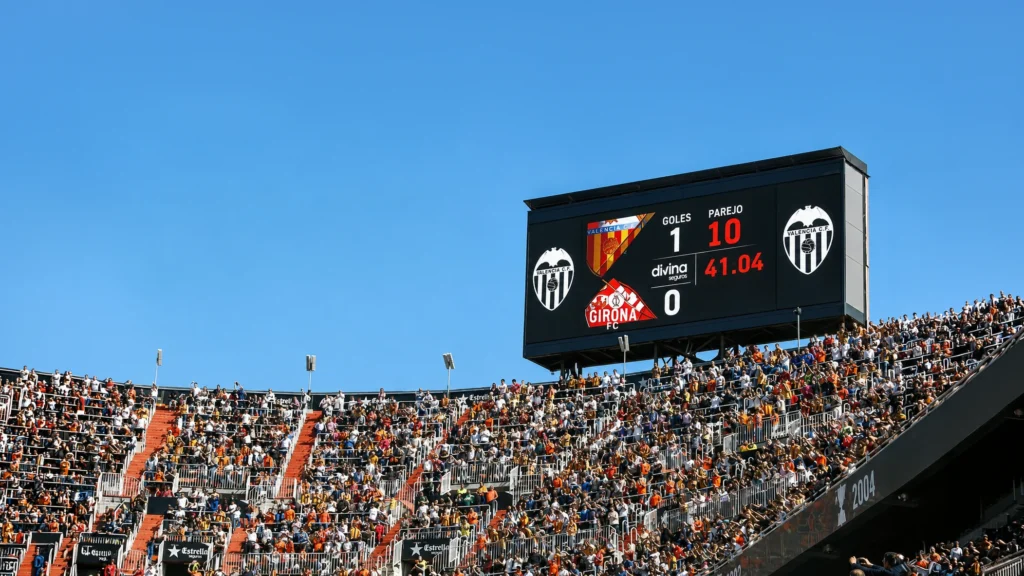
The scoreboard is the only surface every seat looks at, so it is sized from the furthest row rather than the nearest. An outdoor venue needs enough brightness to stay legible in direct afternoon sun and enough dimming range not to glare at a night fixture: a spread that peak-brightness figures alone never describe.
The Cobalt Scoreboard is built for that position: up to 10,000 nits so the score reads against the sky, an IP-rated cabinet that stays outdoors all season, and a feed that carries live timing data, replays and sponsor loops without a visible switch between them. The same cabinet serves a football scoreboard, a tennis court and an athletics meeting: only the data source changes.
Fascia / ribbon
Continuous ribbon displays for premium seating areas, brand storytelling and synchronized event sequences.
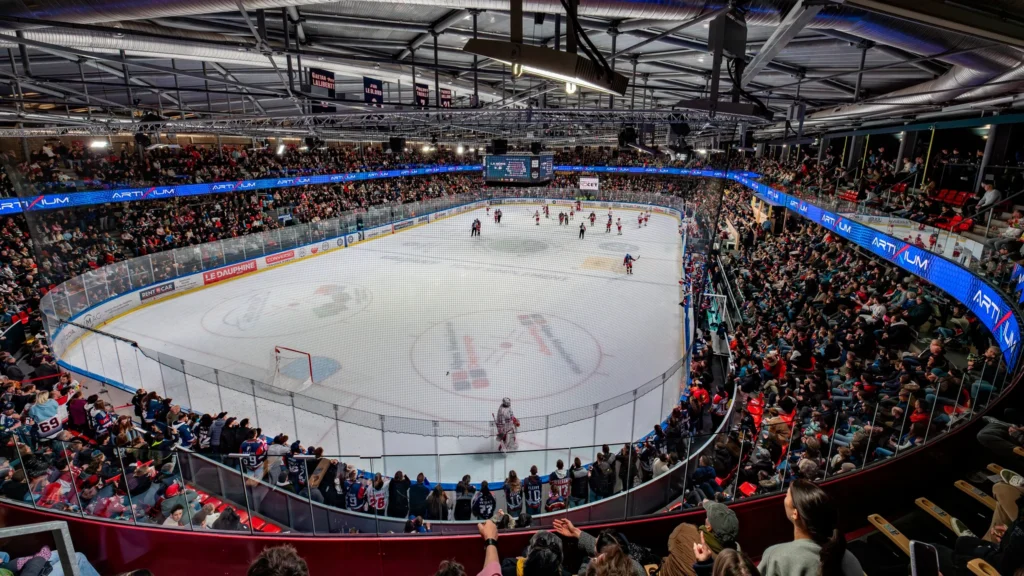
A ribbon is one continuous canvas wrapped around the bowl, often past a hundred metres, which makes uniformity the whole exercise: a cabinet that drifts half a shade is invisible alone and obvious in a row of eighty. The curve is rarely regular either, so the fixing system carries as much of the project as the panel does.
The Cobalt Fascia is the cabinet we run on those tiers: 10,000 nits, IP68/IP67, and a format made for long horizontal runs that stay colour-matched end to end. Content plays synchronised with the main screen, so a sponsor sequence sweeps the whole bowl in a single movement.
LED stairs
Integrated stair displays that turn seating access and architectural steps into visible information or brand surfaces.
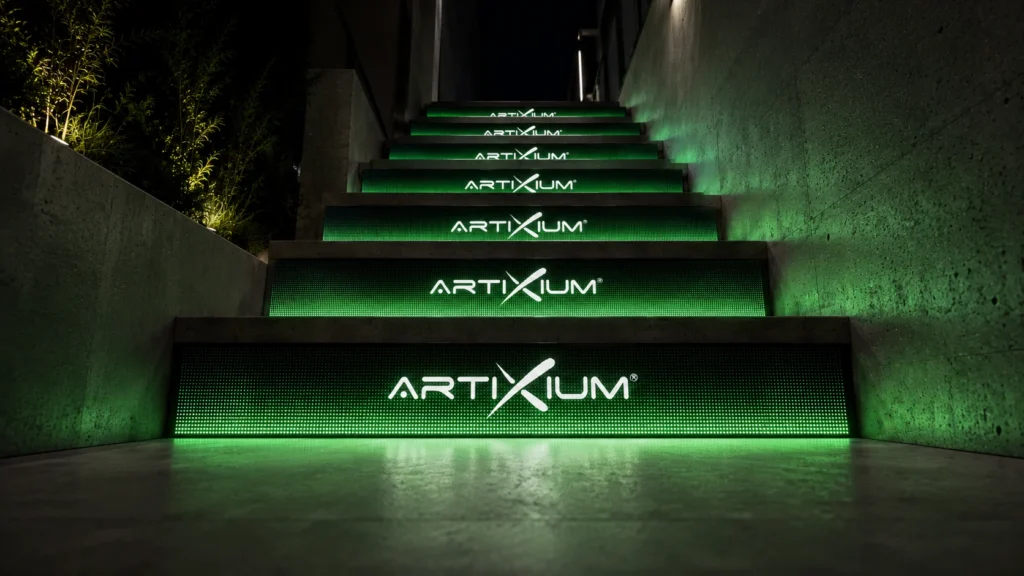
Stair displays sit on the vertical face of each step, so they are read from below at a sharp angle and from a short distance (a few metres, sometimes less), which sets the pixel pitch. They also live in a public circulation area: cleaned with the rest of the concourse, knocked by bags and feet, so the front face and the fixing matter more than the specification sheet suggests.
No two staircases are alike, so these are nearly always custom projects: riser height, tread depth and the curve of the flight are measured on site, and the cabinet is drawn around them rather than cut to fit. The return is advertising inventory a venue did not previously have to sell.
Vomitory
Display surfaces positioned around arena entrances and access points to guide spectators and extend event communication.
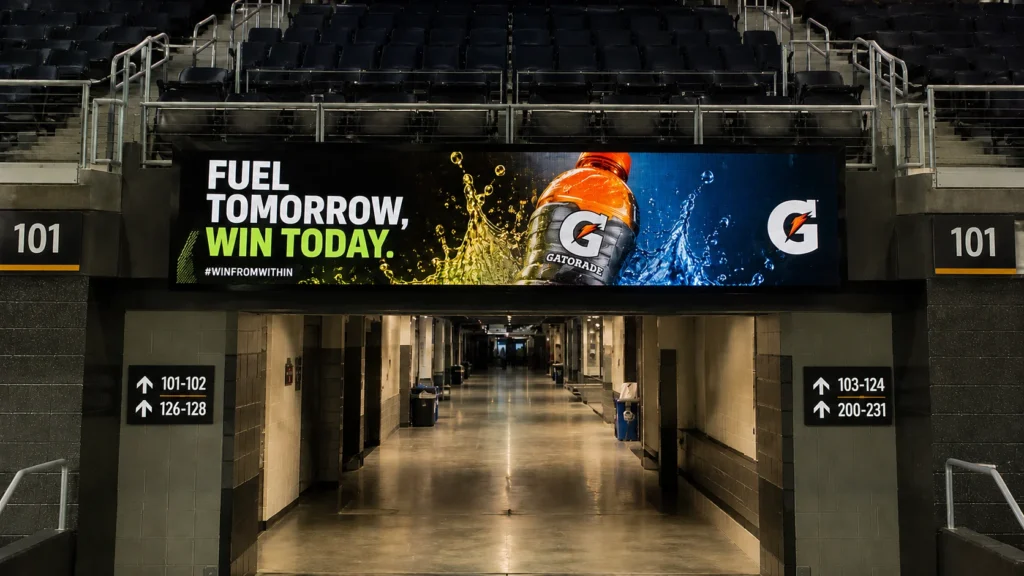
Vomitory screens sit at the tunnels where spectators enter the bowl, a position that is half wayfinding and half advertising. They carry gate numbers and safety messages while the stands fill, then switch to sponsor content once the match starts. Because they are read at close range by a moving crowd, they use a finer pitch than anything on the pitch side, and they have to stay readable under the mixed lighting of a concourse.
Depending on the surface, the Thorite 3 covers vomitory screens read from a few metres, and the Cobalt the larger ones seen from across the concourse. Both are front-serviced, which matters in a corridor where the back of the screen is usually against the wall.
We build LED
for every kind of sport venue
Artixium manufactures LED displays for football and rugby stadiums, indoor arenas built for basketball, handball, volleyball and ice hockey, municipal sports halls and hospitality areas. The same factory behind all of them, four very different briefs in front.
Stadium
Football and rugby grounds: read from the far stand and by the broadcast camera, installed between two fixtures.
Viewing distance
We specify from the viewing distance, not from a catalogue. A surface read from the far stand and one read from three metres away in a box are ten pixel-pitch classes apart, and we build both.
Indoor arena
Basketball, handball, volleyball and ice hockey: a closed bowl where black level matters more than brightness.
Gymnasium
Club handball, basketball and volleyball: one wall-mounted scoreboard with live timing, on a club budget.
The building
We engineer to the building. An open bowl takes rain, sun and floodlights; a closed hall is lit under control, where black level counts for more than peak brightness; wooden cladding and low ceilings decide the fixing.
VIP boxes
Watched from three metres: fine pitch, silent, finished like furniture.
The budget
And we size to the budget. One wall-mounted scoreboard can cover a club’s entire need, where a stadium runs four systems at once. Both are real projects for us: the four below show what each one involves.
Need advice ?
Our stadium LED display projects
Why choose Artixium for a stadium LED display?
Artixium helps sport venues move from technical brief to operational LED system with coordinated project management, sport-ready products, installation support and long-term maintenance.
Faster project coordination
Technical study, product configuration, logistics and venue constraints are aligned early to keep the project moving.
Perimeter LED, scoreboards, fascia and indoor systems are selected around visibility, safety and match-day use.
Artixium supports on-site deployment, commissioning and coordination with stadium or arena technical teams.
Maintenance planning, spare parts and repair follow-up help protect operations after installation.
Our stadium LED display products
Visit our showroom
- Plan your visit
Configure your LED screen
- Configure my screen
Tell us about your venue
Send the basics (venue, surface and timing) and a sport specialist replies with a first technical read, not a brochure.
- A first technical read within one business day
- Perimeter, scoreboard, ribbon or concourse — all in-house
- Installation between fixtures, planned around your calendar
Frequently asked questions
How do I choose the right LED system for my venue?
It all starts with your venue: the size of the stadium, how far the crowd sits from the screen, indoor or outdoor, what you want to show and your budget. We visit the site before recommending a screen.
What pixel pitch should a perimeter LED board use?
Pixel pitch is the gap between two light points on the screen. Pitch-side, the screen is seen from a distance, from the stands and by TV cameras, so a gap of 8 to 10 mm is enough outdoors. A finer screen would cost more without anyone seeing the difference, in the stadium or on TV.
Are Artixium perimeter boards compliant with FIFA and UEFA requirements?
Yes. Our pitch-side systems follow FIFA and UEFA rules: they absorb the impact if a player runs into them and are tilted to the required angle. The Neipatec ST was designed for these requirements from the start.
What refresh rate does a stadium LED display need to be filmed?
To look good on TV, a stadium LED display has to refresh very fast. Otherwise the camera picks up stripes or flicker, even though the crowd in the stadium sees nothing wrong. This is decided when choosing the screen, not fixed afterwards.
Can perimeter LED be rented for a single fixture or tournament?
Yes, through a rental company: we do not rent directly. A club hosting a few matches a season usually rents, while a stadium with weekly matches buys. Either way, Artixium builds the screen: we sell it to the club, its installer or rental companies.
How much does a stadium LED display cost?
The price mainly depends on the size of the screen, how sharp the image is, its brightness and the structure that holds it. A pitch-side strip and a giant main screen are very different projects, even on the same budget. That is why we quote from your project rather than a catalogue price. For a first idea of prices, see our LED screen price page.
Can Artixium manage installation and maintenance?
Yes. We handle installation, start-up and long-term upkeep. Spare parts and repairs are planned around your match calendar.
Can the system support sponsors and advertising revenue?
Yes. The pitch side, the ring around the stands, the stairs and the stadium entrance are all spaces you can sell to sponsors. The screens can show the same ad at the same time, so a brand can sweep around the whole stadium in one go.
How fast can a sport LED project be deployed?
It depends on manufacturing time and when the stadium is free. Installation happens between matches, so the schedule is built around your season.