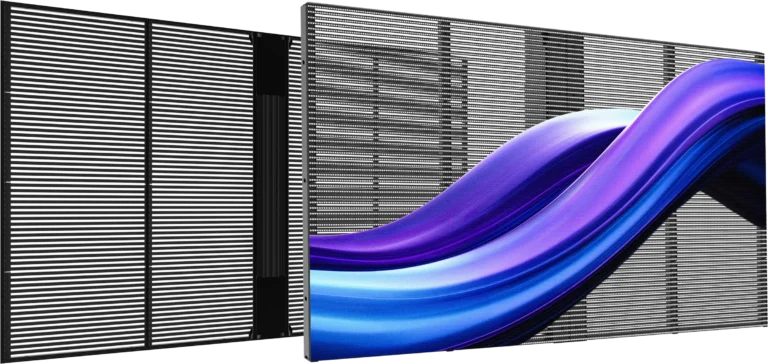
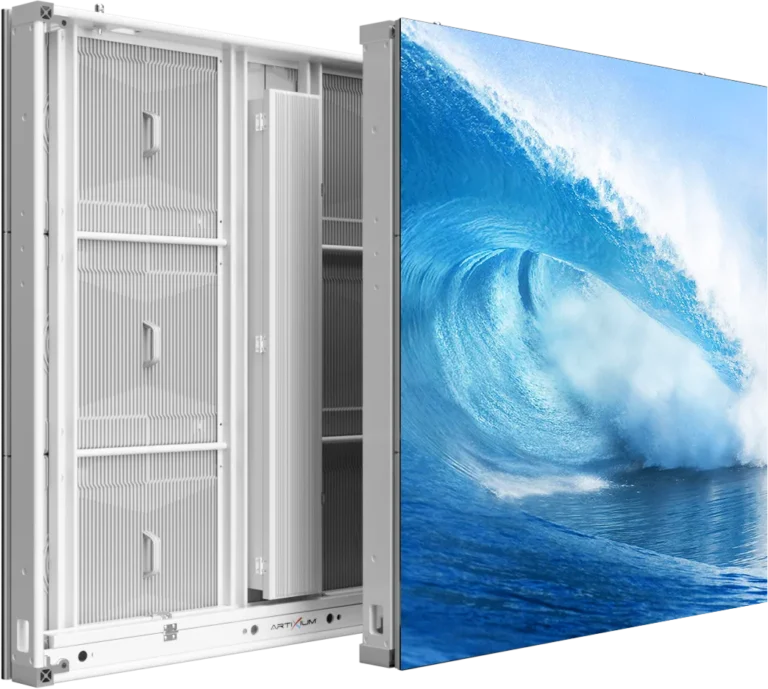
Transport LED display
A transport LED display informs passengers and carries advertising in places that never close: it must be reliable, readable from a distance and installed without disrupting operations. Artixium designs LED displays for airports, railway stations, metro networks and cruise terminals.


Which LED displays for transport hubs?
Passenger information and advertising screens for environments that never close.
Suspended hall screens
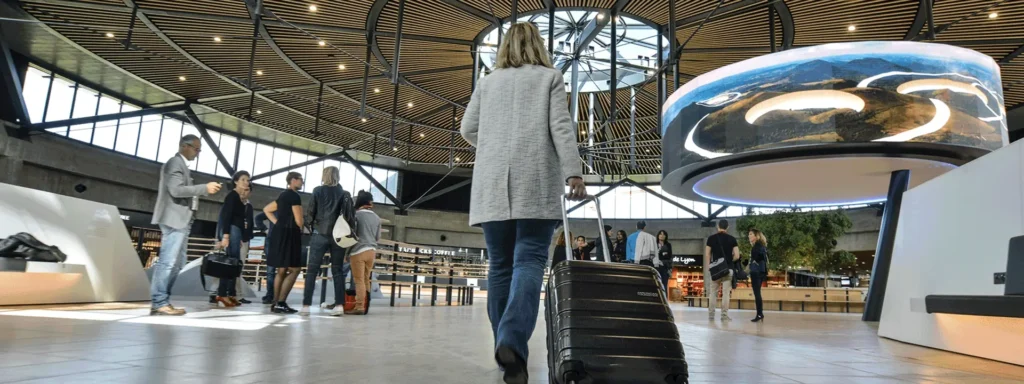
A screen hung above the flows, visible from the whole hall: a ring, a cylinder or a large format.
It is read from tens of metres away, in changing daylight, and serviced without closing the hall. Brightness rises when sun comes through the glass roof and drops in the evening.
The suspension structure is designed with the building, taking into account cabinet weight and maintenance access. Visible from everywhere, a transport LED display quickly becomes a landmark for travellers.
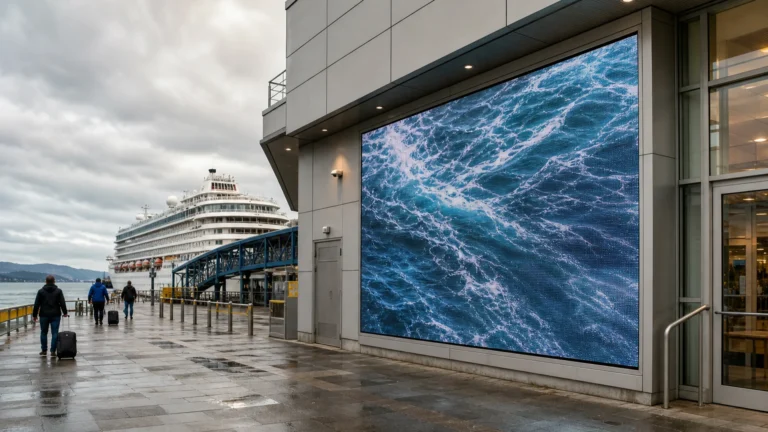
Large outdoor screens
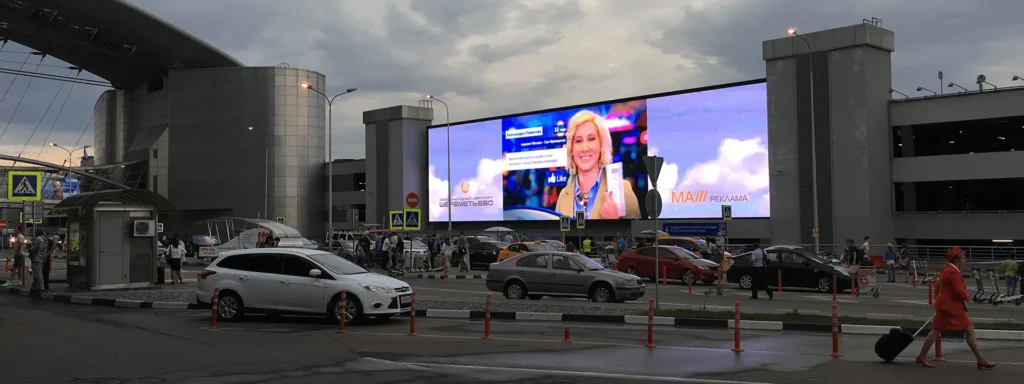
Advertising and information screens on forecourts, car parks and road approaches.
Exposed to weather, dust and salt, they need sealed cabinets and brightness that holds in full sun. Components have to cope with the temperature swing between summer and winter.
Next to a road, brightness is lowered at night so drivers are not dazzled. Screens from the outdoor range, such as Thorite 3 or Cobalt, cover these locations.
LED columns
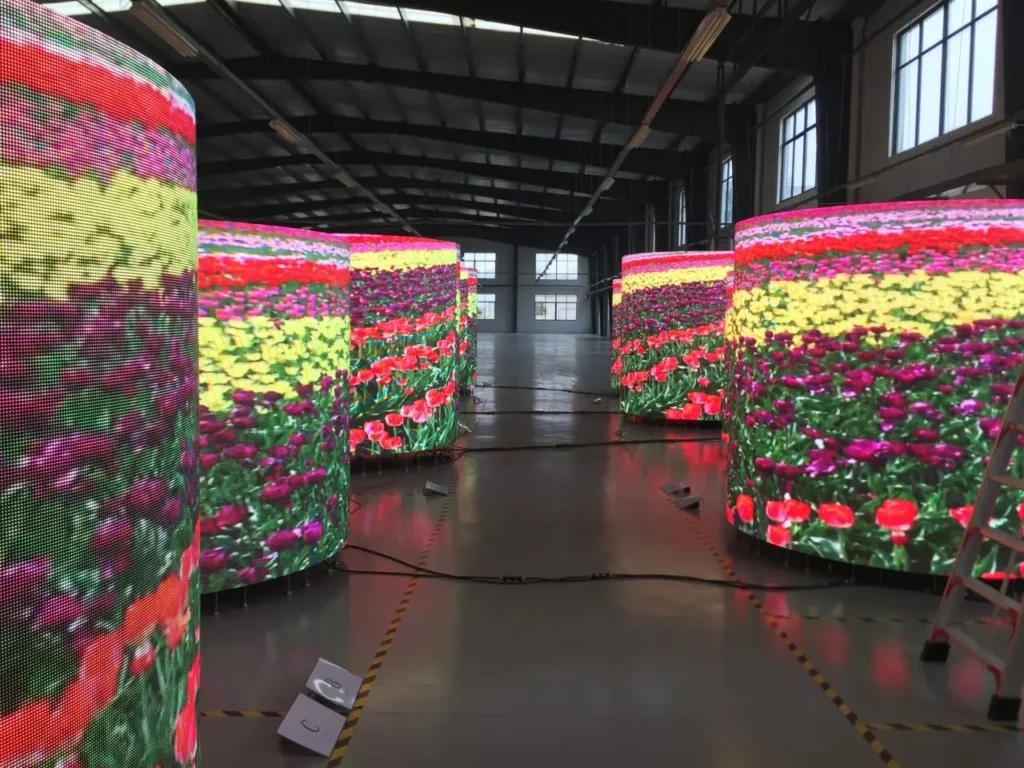
Columns wrapped in LED screens in stations, concourses and transfer halls.
The content reads all the way round, and the cabinet follows the shape of the existing pillar. Corners are handled so the image runs from one face to the next without a break.
Placed on the main walkways, columns carry passenger information, directions to the platforms or advertising. Their front face has to withstand rubbing from luggage and trolleys.
Indoor LED walls
Large image walls in terminals and ferry stations, for passenger information or the venue’s brand.
They connect directly to flight and departure feeds, with no one at the controls. The same wall can switch between timetables, safety messages and content from the site’s retailers.
On from the first departure to the last, these transport LED displays need components made for continuous use and front maintenance that can be done overnight without taking the wall apart.
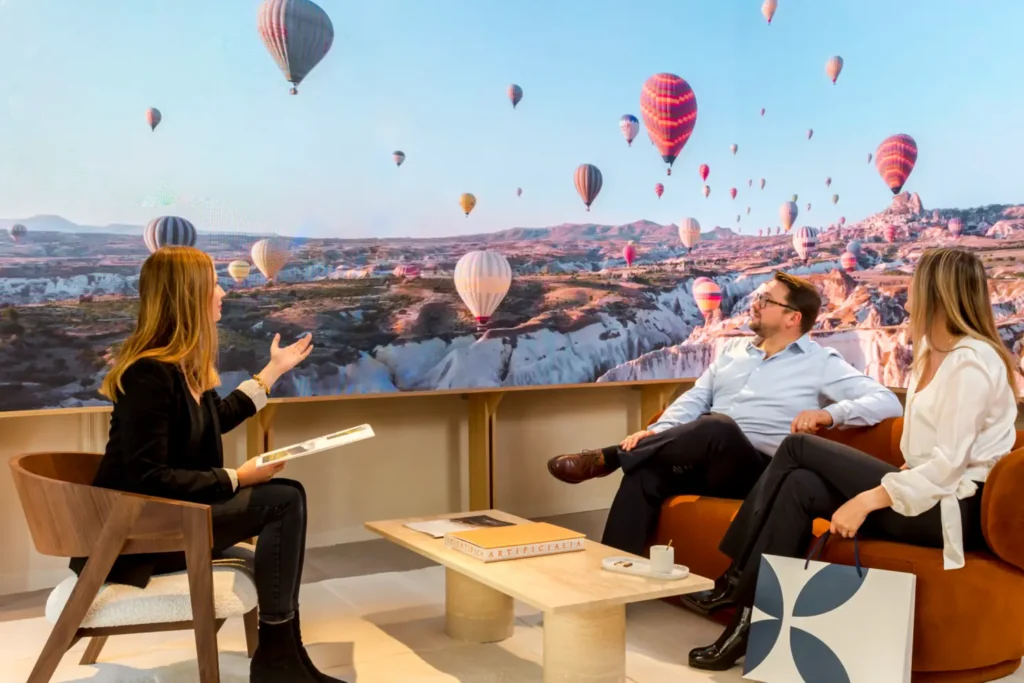
Lounge and retail screens
Screens for waiting lounges, shops and premium areas in transport hubs.
Seen up close, they are judged as in a hotel: silent, warm-calibrated, finished into the wall. A fine pixel pitch keeps the image grid invisible at under two metres.
In a station or airport shop, the screen showcases products and stays readable despite the window lighting. The cabinet blends into the fit-out, with a slim frame or none at all.
We build LED for every kind of transport hub
Artixium manufactures LED displays for airports, railway and metro stations, ports and highway operators: sites that run continuously and cannot close for an installation.
Airport terminal
Read at five metres and fifty at once, in mixed daylight, all day.
Environment first
We specify for the environment before the image. Dust, vibration, salt air and temperature swings decide service life; pitch and brightness follow the reading distance.
Planned maintenance
We engineer around the maintenance window: front access, sealed cabinets, and a service position that does not require closing a hall, a platform or a lane.
Station concourse
Dust, vibration, and a duty cycle that stops for a few hours a night.
Travel retail
Judged against a hotel: silent, warm-calibrated, finished into the wall.
Connected to your systems
And we connect to your systems. The screen only earns its place when it takes the flight or departure feed directly, with nobody in the loop.
Highway signage
Read at speed, exposed to spray and salt, serviced without closing a lane.
Need advice ?
Our transport LED display projects
Why choose Artixium for a transport LED display?
Transport screens run continuously in front of the public. Artixium designs them around the passenger journey, the architecture and the operating budget.
Architectural integration
We work with airport and station architects so the installation becomes an architectural feature, not an add-on.
Passenger-first design
Brightness, viewing angles and content layouts designed around real passenger journeys, with accessibility in mind.
Low total cost of ownership
Efficient power supplies, remote diagnostics and field-replaceable modules keep the operating budget predictable.
Support wherever you operate
From Lyon to Moscow to Paris, we support transport operators with local service and spare-part stocking.
Our transport LED display products
Visit our showroom
- Plan your visit
Configure your LED screen
- Configure my screen
Frequently asked questions
Can the display connect to our flight information system?
Yes. Flight information (FIDS), travel information systems and DOOH ad servers such as Broadsign and Hivestack are supported: the screen plugs into the stack you already run.
How do you install in a terminal that never closes?
In the windows the operator gives us. Night and low-traffic slots, phased zones and pre-assembled structures keep the public flow open while the work advances.
Can you build non-rectangular displays?
Yes. Curved, circular, columnar and suspended forms are all possible: the 8-metre diameter ring at Lyon Saint-Exupery is one example.
How bright do outdoor transport screens need to be?
Up to 10,000 nits for signage facing direct sunlight. Indoor terminal displays use adaptive brightness instead, tuned to the ambient light so they stay comfortable for passengers.
Can you install without closing the terminal?
That is the normal condition rather than the exception. We work in the maintenance windows the operator gives us (often a few hours overnight) and that shapes how the installation is sequenced and staged. It is planned before the order, not improvised on site.
How reliable are these displays?
Reliability here is designed rather than promised: redundant power, redundant processing and front access so a fault is cleared inside one short window. We contract a response time, because in a terminal a dark screen is an operational problem.
Can the screens show advertising and operational information?
Yes, and many operators run both: operational content by default, with commercial slots scheduled around it. The two feeds come from different systems, so the integration is the part worth designing carefully.
How long do transport installations take?
Manufacture is typically several weeks; installation depends entirely on access windows. A terminal that gives four hours a night takes considerably longer than one that can close a hall for a weekend, and we plan to whichever you actually have.
Tell us about your hub
Airport, station, metro or port. Send the location and the information system the screen has to read from.