
LED screen installation
LED screen installation on site, from site preparation to commissioning
LED screen and video wall installation, executed with precision
Artixium coordinates the key stages of an LED installation: site preparation, mechanical assembly, cabling, configuration, testing and commissioning.
An LED screen is only as good as the way it is fixed, cabled and powered up. Whether it is a single indoor LED video wall or a façade spanning several floors, our teams work alongside the local integrator, the structural engineer and the site manager so that the mounting interface, the fixing points, the load path and the service access are all validated before the first cabinet leaves its flight case.
Every deployment starts from the same technical specification used for design and manufacturing, so that the cabinet configuration, the pixel pitch and the viewing distance signed off on paper are the ones installed on site. When a project has been engineered as a custom LED screen, the fixing hardware arrives already matched to the structure that will carry it.
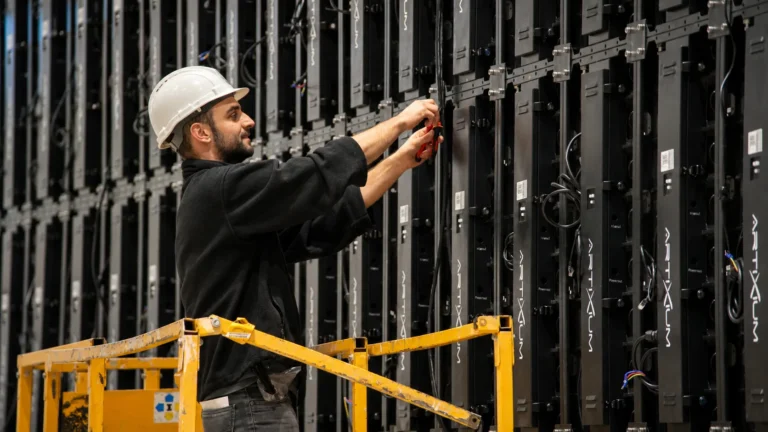
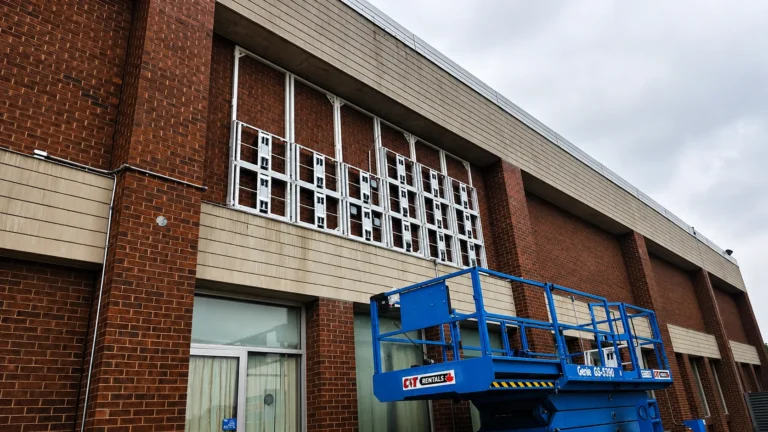
Installed by a coordinated partner network
On site, Artixium works through a network of distributors, installers and integrators. Depending on the country and the project, the team mounting the cabinets may be a local partner working to our assembly drawings and our commissioning procedure, with our own technical team coordinating the deployment and signing off the result. Companies that want to install and support Artixium products can join the distributor network.
The work is then planned around the constraints of the site: night slots in shopping centres, short windows between fixtures in stadiums, restricted access in heritage buildings or working studios. Commissioning ends with a documented site handover covering signal paths, addressing, spare-parts inventory and operating modes, so that the client team can run the screen from day one.
LED screen installation, from site survey to final sign-off
Four steps, from the first on-site checks through to handover.
Site preparation
Access routes, lifting equipment, storage areas and safety zones are checked on site. The structure, the anchor points and the load capacity are verified against the assembly drawings before a single cabinet is unpacked.
Mechanical assembly
Cabinets and support elements are positioned, locked and aligned. Flatness and cabinet-to-cabinet gaps are corrected as the wall goes up, because a misalignment of a fraction of a millimetre becomes visible once the screen is lit.
Cabling & configuration
Power distribution, data links and control equipment are connected and addressed. Redundancy, cable routing and labelling are organised so that a future intervention does not mean tracing the whole installation again.
Testing & commissioning
Signal integrity, screen uniformity, brightness and operating modes are tested in real conditions. Where the site requires it, a calibration pass closes the deployment before handover.
On-site LED installations
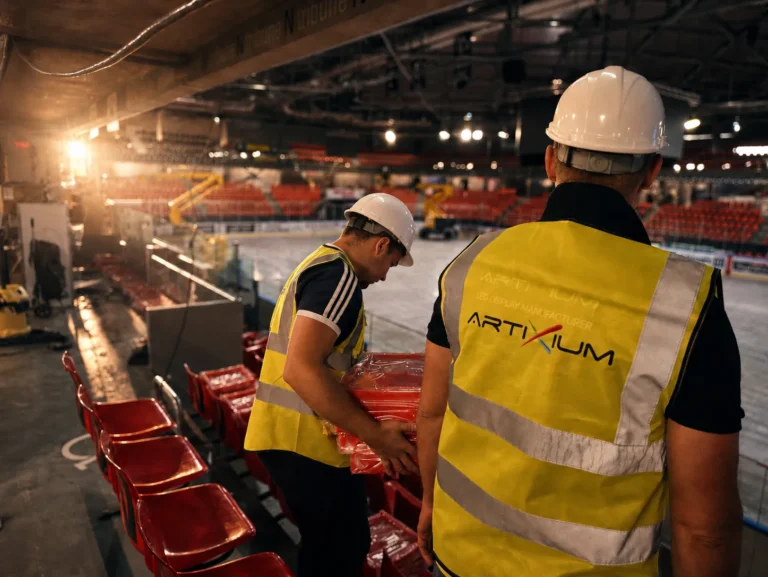
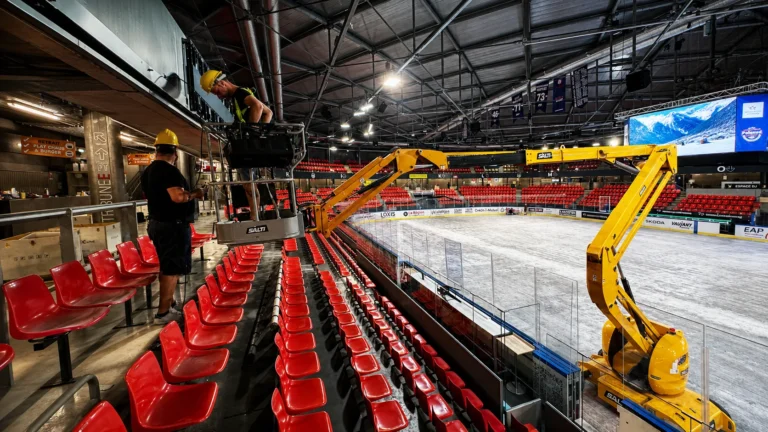
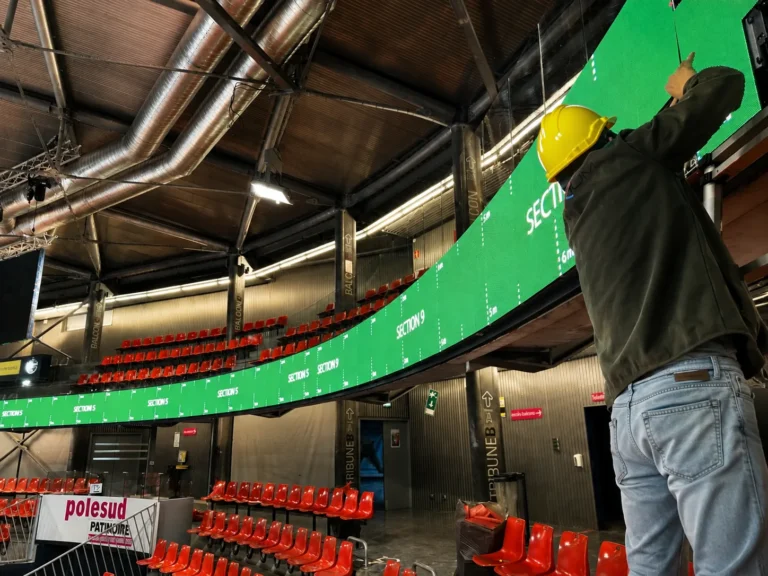
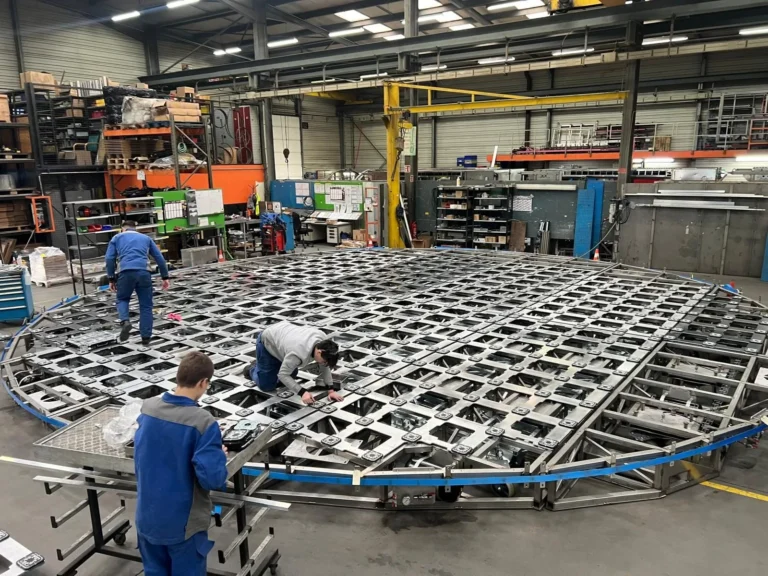
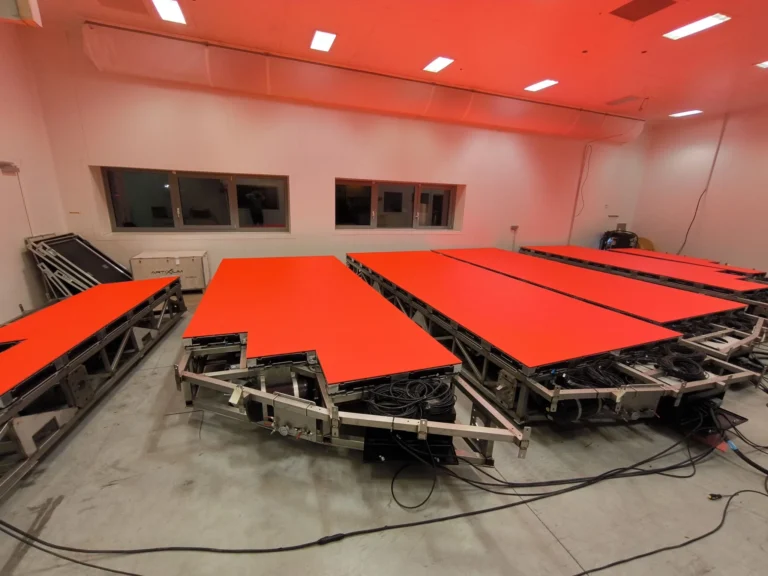
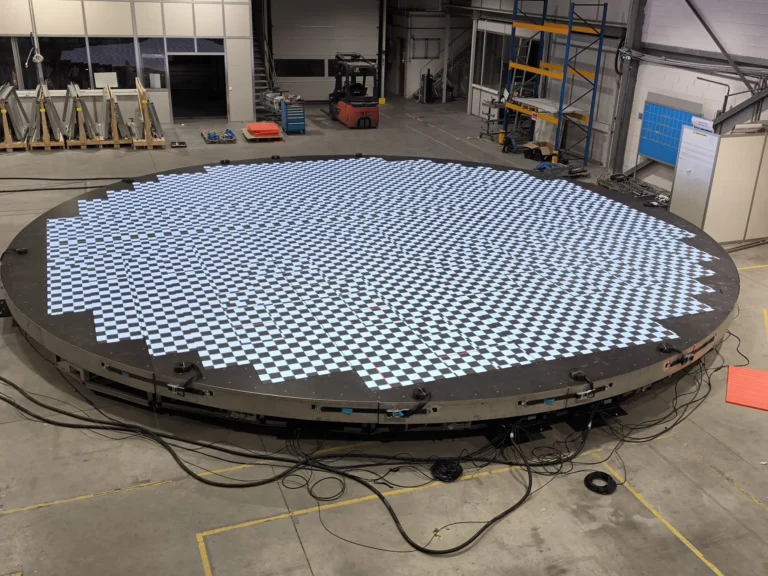
Circus Knie
Outdoor LED facade
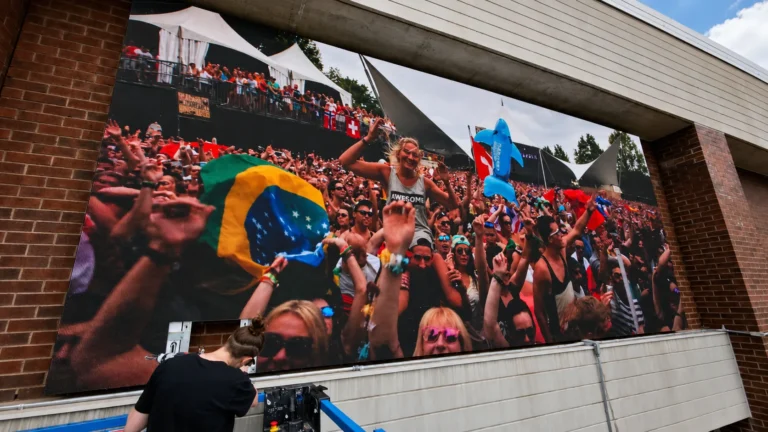
Outdoor LED facade
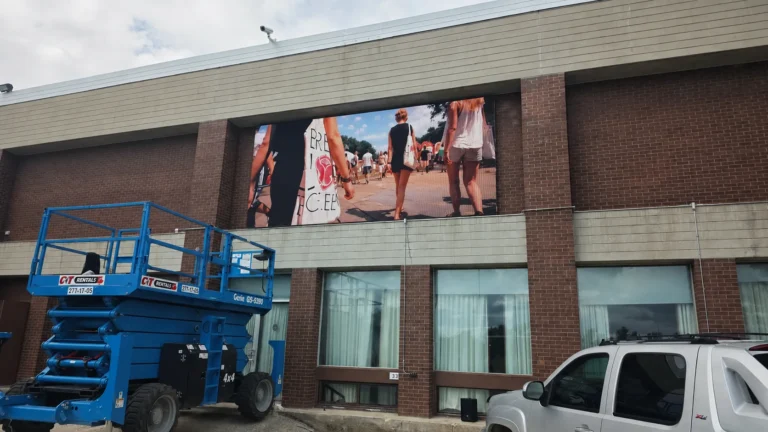
Outdoor LED facade
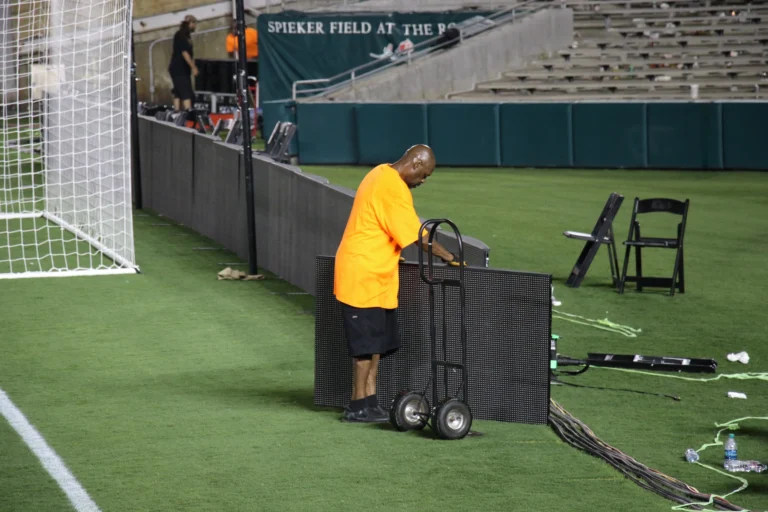
Pitchside LED
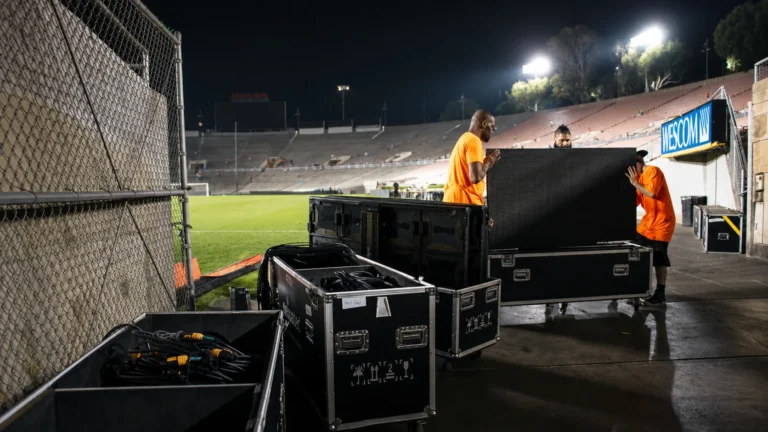
Stadium LED perimeter
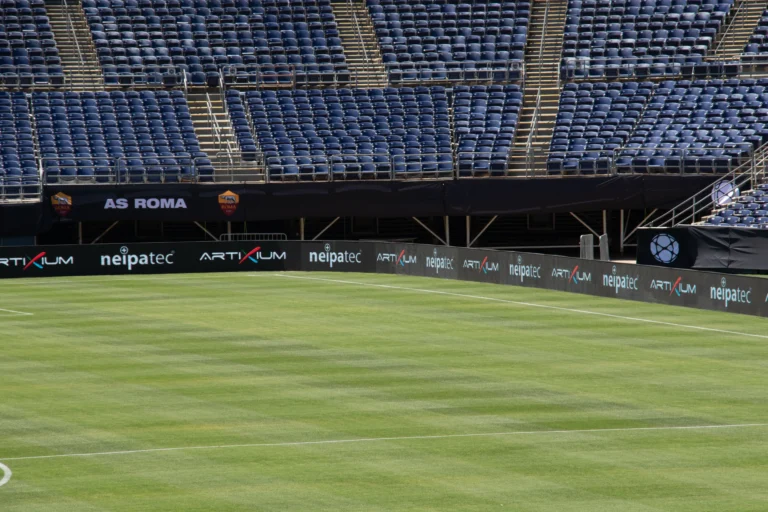
Stadium LED perimeter
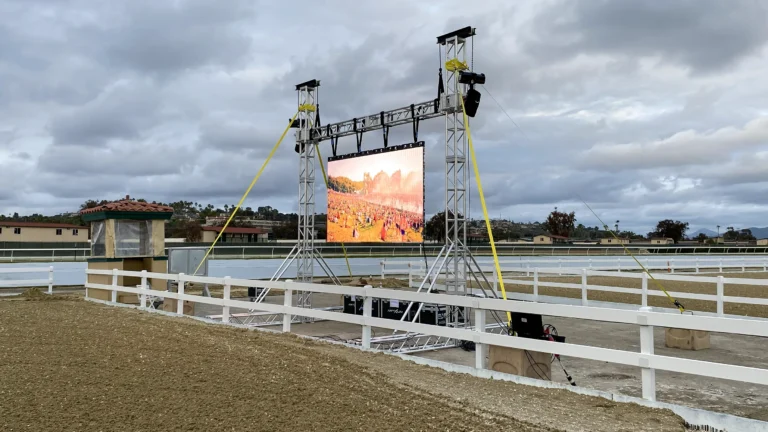
Equestrian LED screen
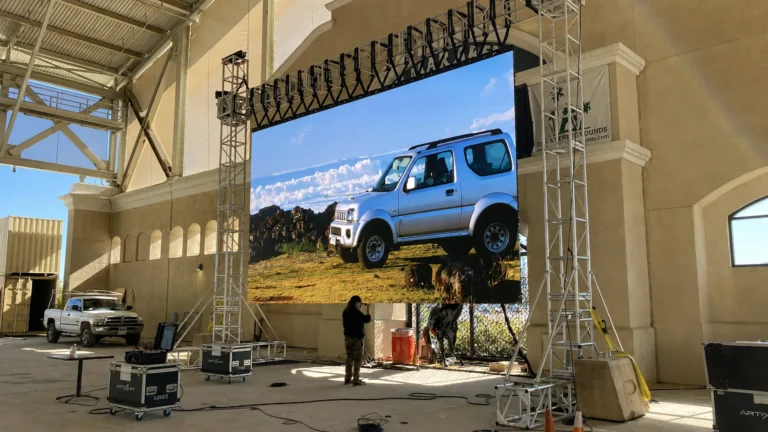
Equestrian LED screen
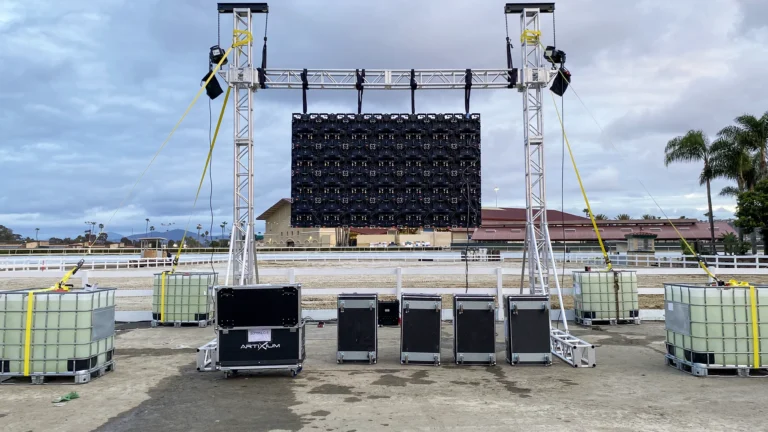
Equestrian LED screen
On video
LED installations across very different sites
Mounting an LED screen in a stadium bowl, a shop window and a broadcast studio are three different jobs. The sequence stays the same; the structure, the access and the sign-off criteria do not.
Stadiums & sports venues
Perimeter systems, giant screens and ribbon boards fixed to the venue structure, installed between fixtures and signed off against broadcast requirements.
Live events & touring
Fast load-in and load-out on production schedules, with cabinet configurations that go up and come down repeatedly without losing alignment.
Retail & shopping centres
Window and in-store screens installed overnight, with cable routing and service access planned around the store layout.
Outdoor advertising & DOOH
Totems, monopoles and façade screens anchored to civil engineering structures, with weatherproofing and maintenance access verified at commissioning.
Studios & virtual production
LED volumes assembled to a surveyed floor plan, with flatness and on-camera behaviour verified before the first shoot.
Transport hubs
Airports, stations and terminals where installation windows are short, public flow never stops, and safety and fire approvals govern the fixings.
Corporate lobbies & showrooms
Indoor walls where the finish matters as much as the image: seamless joints, concealed cabling and a structure that stays serviceable from behind.
LED floors & immersive spaces
Walkable surfaces and clad structures that need load-bearing substructures and a levelling pass before the panels are locked down.
Visit our showroom
- Plan your visit
Configure your LED screen
- Configure my screen
Frequently asked questions
Do you install LED screens from other manufacturers?
No. Artixium takes charge of installing the LED screens it manufactures, through its network of integrators. The mounting interface, the cabinet mechanics and the control chain are ours end to end, which makes it possible to sign off the deployment against the design. Third-party hardware is covered by our repair and maintenance services, not by installation.
Who carries out the on-site installation?
Artixium works through a network of distributors, installers and integrators, coordinated by our own technical teams. Depending on the country and the project, the team mounting the cabinets may be a local partner working to our assembly drawings and our commissioning procedure. Companies wanting to install and support Artixium products can join the distributor network.
Who is responsible for the supporting structure?
The supporting structure is normally the responsibility of the site or its structural engineer. Artixium supplies the mounting interface, the weights, the fixing points and the fixing plan, and validates them with the engineer before the frame is built.
How long does an LED installation take?
It depends on the surface, the access and what can be done in parallel. A small indoor LED video wall can be mounted and commissioned in a day; a stadium perimeter or a façade screen is planned over several days with lifting equipment. The schedule follows from the site survey, not just from the size of the screen.
Can you install outside opening hours?
Yes. Night and weekend slots are common in retail, transport and public venues, and are built into the deployment sequence from the start.
What happens at site handover?
Signal paths, addressing, power distribution and operating modes are documented, the spare-parts inventory is established and the operating team is trained on the system. Technical training can be added so that the team can run and maintain the screen without external support.
Is calibration included in the installation?
A uniformity check is part of commissioning. A full calibration pass is a separate operation, recommended when the screen faces a camera or when cabinets come from different production batches.
Do you also handle delivery to site?
Yes. Packaging, freight, customs documents and the delivery schedule are coordinated so that the hardware arrives protected and on the day the site is ready: see our logistics expertise.