
LED screen calibration
LED screen calibration: colour, brightness and uniformity tuned for real-world conditions
What is calibration?
LED calibration is a necessary step to secure a homogeneous image and adapted brightness on large-format LED displays.
The process uses dedicated software and photographic measurement to align the luminance of the LEDs that form the installation, reducing visible defects between cabinets, modules and color channels.
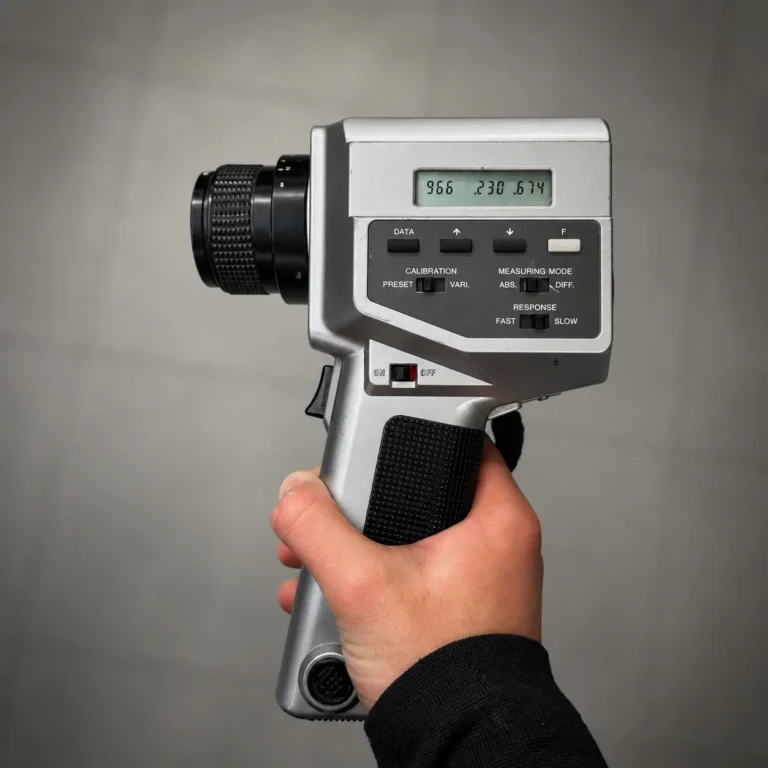
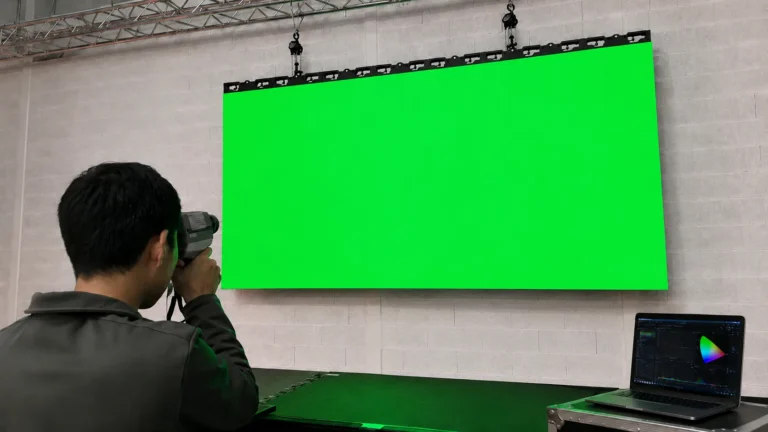
No two LED modules are identical
No two LED modules leave a production line perfectly identical, and they do not age at the same rate either. Left uncorrected, those small differences read as patchwork: a slightly warmer cabinet here, a brighter row there, a seam that only becomes obvious on a flat grey or a corporate blue.
Calibration measures the real output of the installed screen and writes a correction profile into the controller, so the wall behaves as one surface rather than as a grid of independent panels. It is done after installation, after module replacement, or whenever a fleet has drifted apart with use.
Why LED calibration matters for rental displays
Calibration matters most in rental, where the image must stay the same from one event to the next. Frequent assembly, dismantling and transport can create brightness or color variations between modules over time. Artixium calibrates rental fleets quickly, so each screen keeps a clean result, show after show.
Consistent color and brightness
Regular calibration helps maintain homogeneous color and luminance across the entire LED surface.
Visual impact on site
A balanced screen preserves the aesthetics, clarity and visual impact expected during live events.
Longer module lifespan
Balanced operating performance helps extend module lifespan and limits uneven aging within rental fleets.
Fewer service returns
Reducing visible color or brightness gaps helps avoid support returns caused by perceived display defects.
LED screen calibration: when should you plan it?
Artixium calibrates screens after deployment, service operations or configuration changes, with settings matched to the operating context.
New LED installation
Initial adjustment after mounting, cabling and control system configuration.
Module replacement
Correction of new or serviced modules to align them with the existing display.
Broadcast / virtual production
Visual checks for camera capture, moire risk, refresh behavior and color response.
Retail & showroom display
Fine tuning for close viewing distances, brand content and controlled lighting.
Stadium perimeter LED
Brightness and uniformity settings adapted to sport venues and camera exposure.
Rental LED fleet
Consistent rendering event after event, with fewer visual defects perceived as service issues.
Existing LED display
Restoration of visual consistency when modules age differently over time.
Outdoor advertising screen
Daylight performance, night operation and long-distance readability are reviewed.
Visit our showroom
- Plan your visit
Configure your LED screen
- Configure my screen
Frequently asked questions
How often should an LED screen be calibrated?
There is no fixed interval. A permanent indoor screen in stable conditions can run for years without a second calibration pass; a rental fleet that is assembled, transported and dismantled dozens of times a year drifts far faster. The trigger is visual (when cabinets stop matching), plus any service operation that introduces new modules.
Can you calibrate a screen Artixium did not supply?
Yes, provided the control system exposes the correction data. Calibration is carried out on third-party LED systems as well as on Artixium products.
Does calibration reduce brightness?
Correcting a display means aligning every cabinet on the output the weakest ones can actually reach, so peak brightness drops slightly. On most installations that loss is far less visible than the patchwork it removes.
Is calibration done on site or in the workshop?
Both. Installed screens are measured in place, under the lighting they will actually work in. Modules that come back through repair are corrected in the workshop before they are reintegrated, so a serviced panel does not stand out once refitted.
Why does a screen look worse on camera than to the eye?
A camera has a narrower tolerance than human vision and exposes differences the eye compensates for, on top of refresh and moire behaviour. Screens facing a camera (broadcast, virtual production, stadium perimeter) are calibrated against the capture conditions, not just the room.
Does calibration fix dead pixels or faulty modules?
No. Calibration corrects luminance and colour on working LEDs. A dead pixel, a failed driver or a damaged connector is a hardware fault and goes through repair first.
How long does a calibration take?
It depends on surface area, access and how the screen is addressed. The measurement pass is the slow part, since each cabinet has to be captured under stable conditions; the correction itself is quick. A timing is given after the screen has been surveyed.