Broadcast studio LED wall
A broadcast studio LED wall replaces the painted set or the green screen: it must appear on camera without banding or moiré, with accurate colour.


Which LED walls for a broadcast studio?
Artixium designs LED walls for TV sets, XR studios and virtual production. LED displays engineered for the camera, not just for the eye.
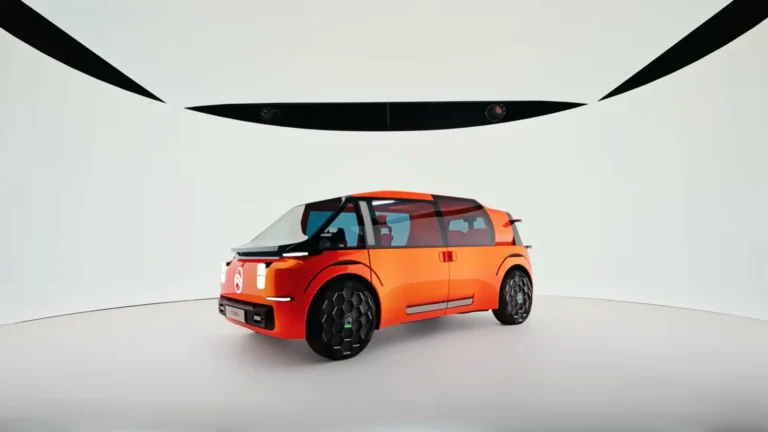
Virtual production LED volumes
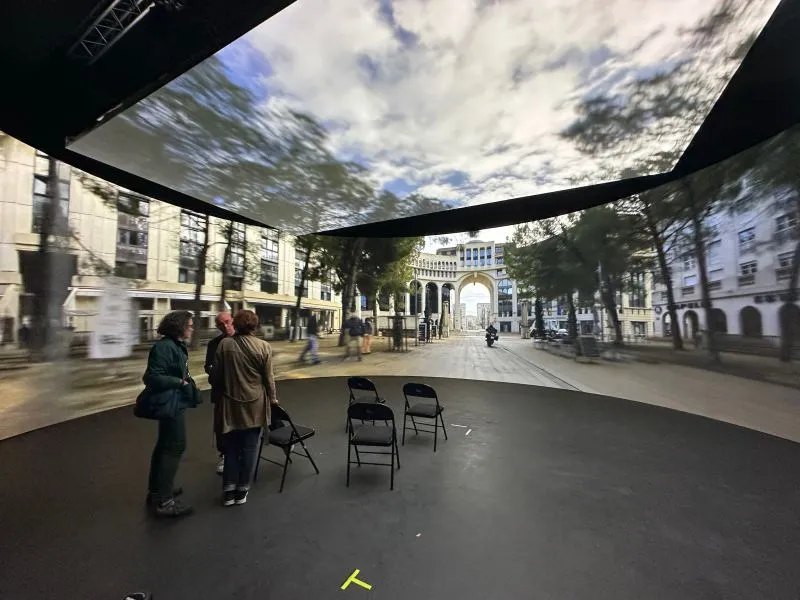
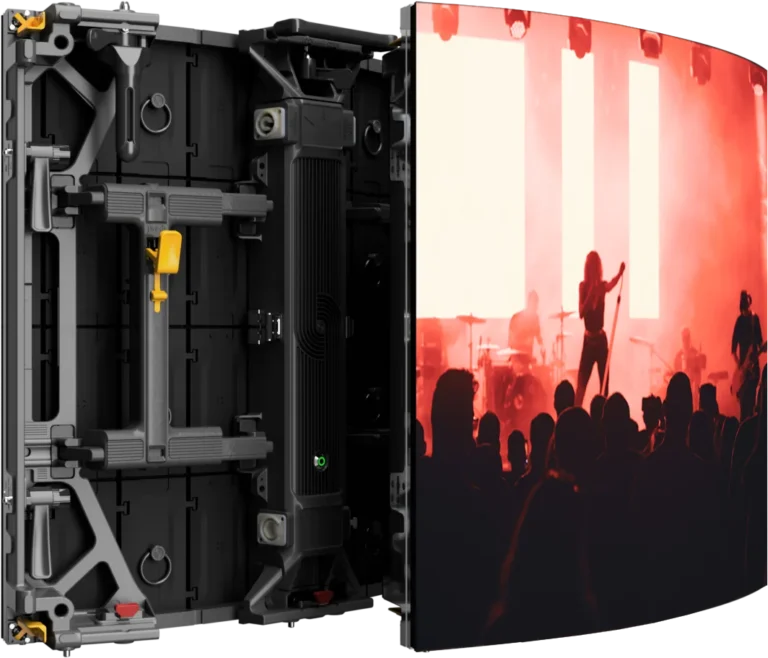
A curved LED wall that surrounds the set: the background is filmed directly, and the screen lights the actors too.
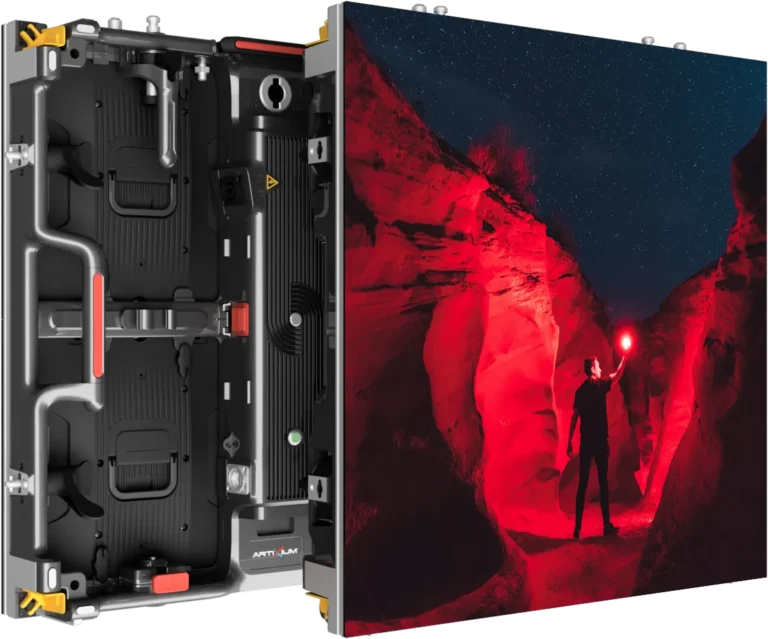
Colour fidelity, refresh rate and scan are set for the camera sensor, with no banding or moiré in the rushes. Beryl XR is built for this; for a tightly curved or demountable volume, Boron 2 XR gives the same performance in a lighter cabinet.
The curve and height of the volume are sized with the director of photography, based on the lenses and camera moves planned.
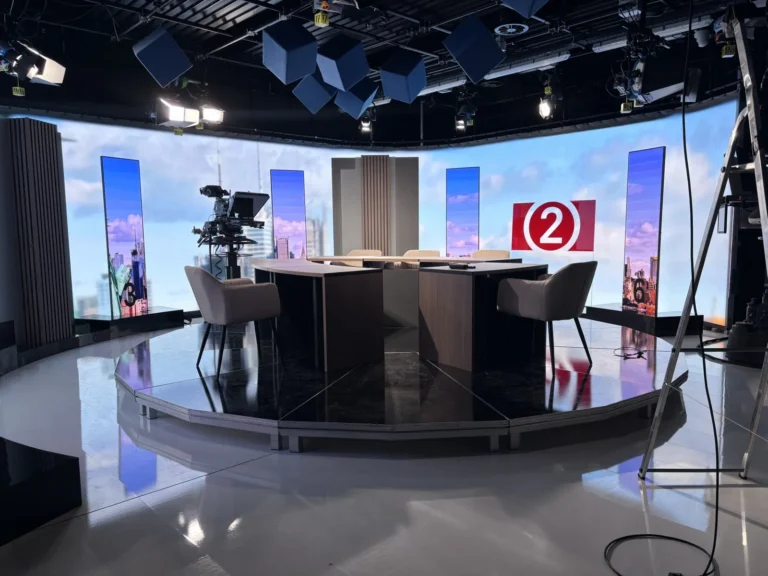
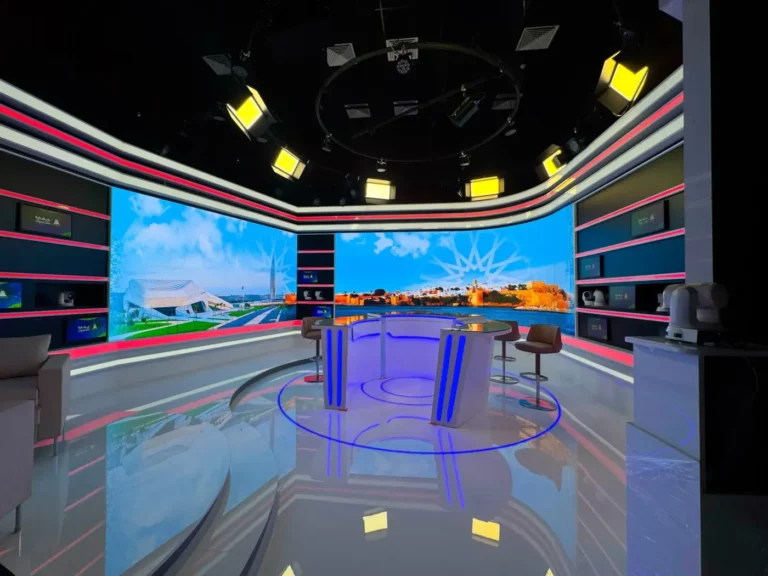
TV studio LED walls
A fixed backdrop wall for news, shows and streaming studios.
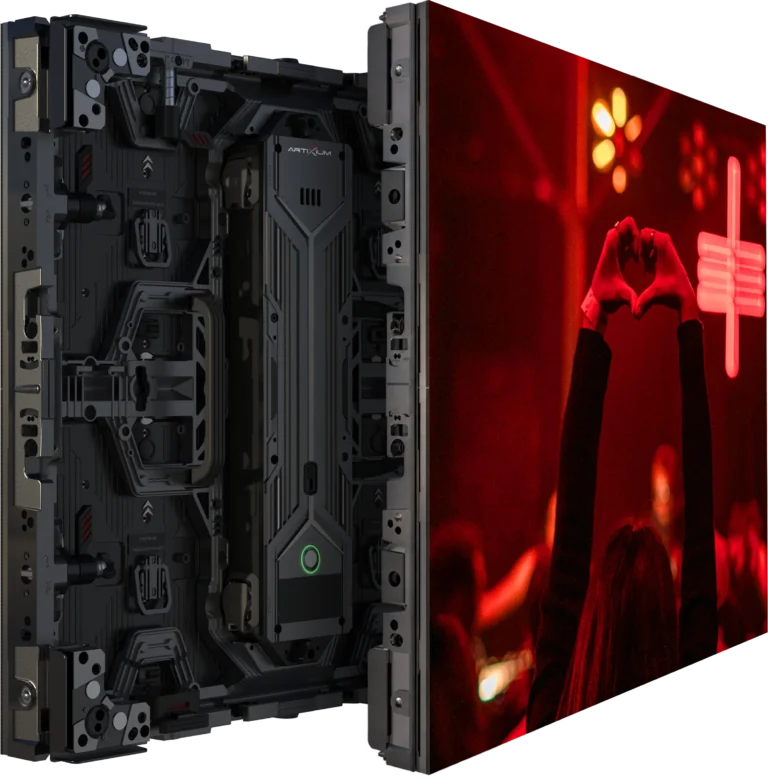
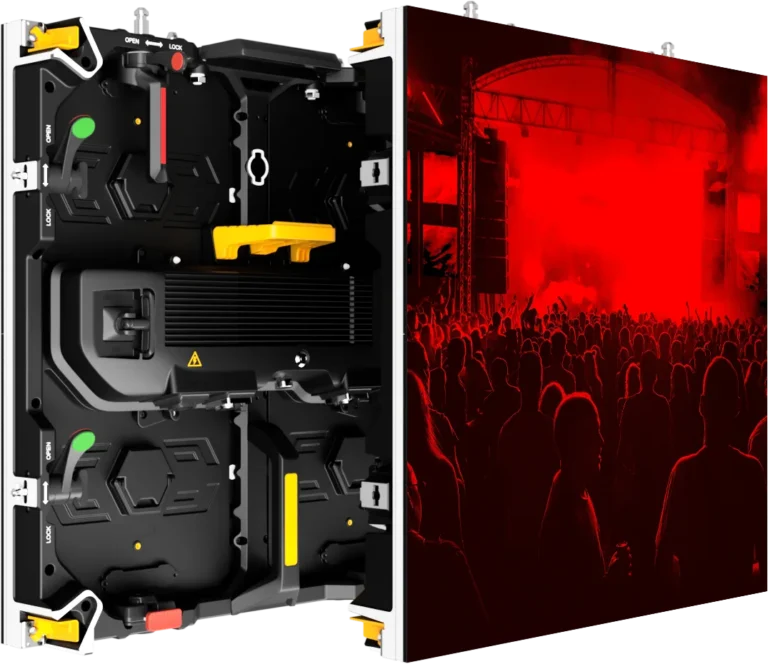
On for hours under the lights, it keeps deep blacks, stable colour and a flicker-free image on camera. Beryl XR equips fixed studios.
Pixel pitch is chosen from the distance between camera and wall: the closer the presenter is framed to the screen, the finer the pixel pitch has to be to avoid moiré. A broadcast studio LED wall is also matched to the colour science of the studio cameras.
Interchangeable LED sets
An LED wall that moves from one shoot to the next: commercials, music videos, brand content.
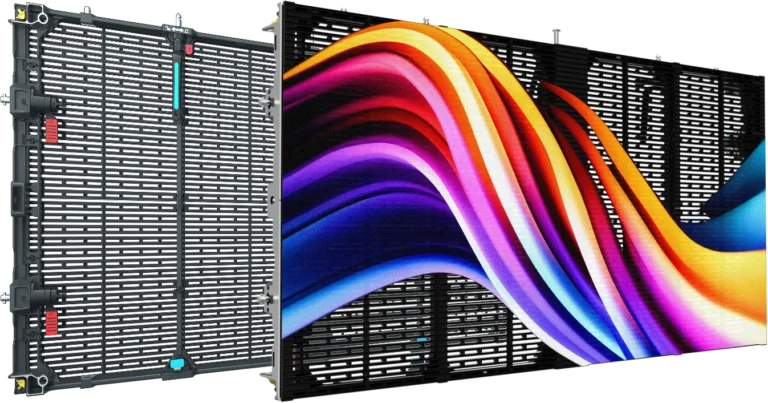
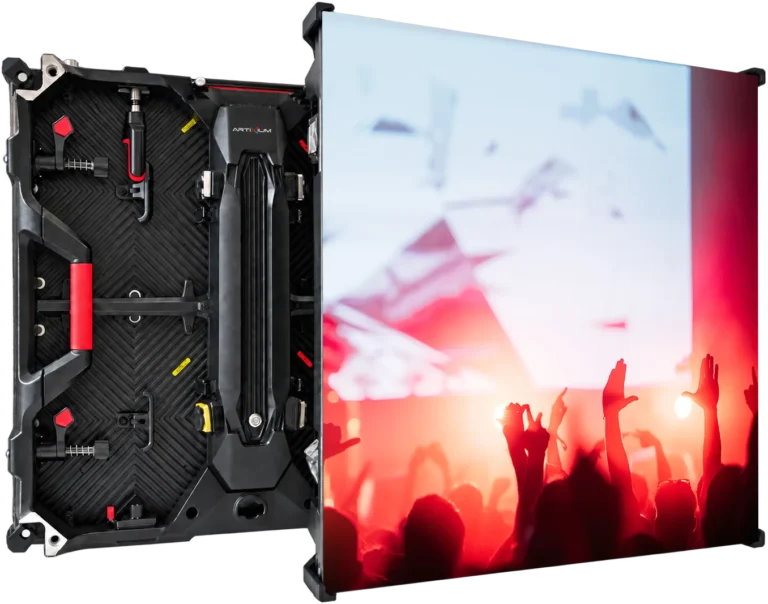
The set changes from take to take without moving the crew. The Beryl touring range goes up and comes down quickly between productions.
The same set of screens serves several productions a year, as a flat wall or a curve depending on the set.
XR stages
An LED wall that works as the set for the audience in the room and as the background for the camera.
Frame rate and camera sync have to be exact so the image holds on site and on the broadcast. The audience sees a living set, the camera a background with no flicker or lag.
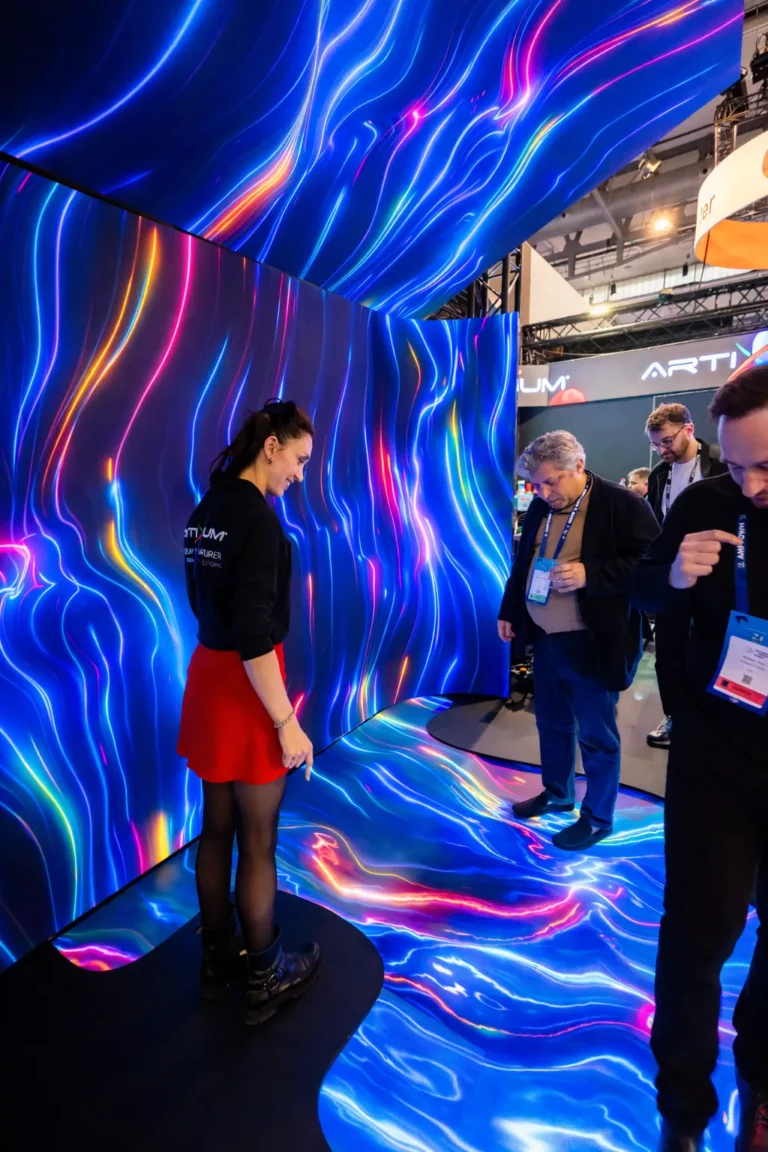
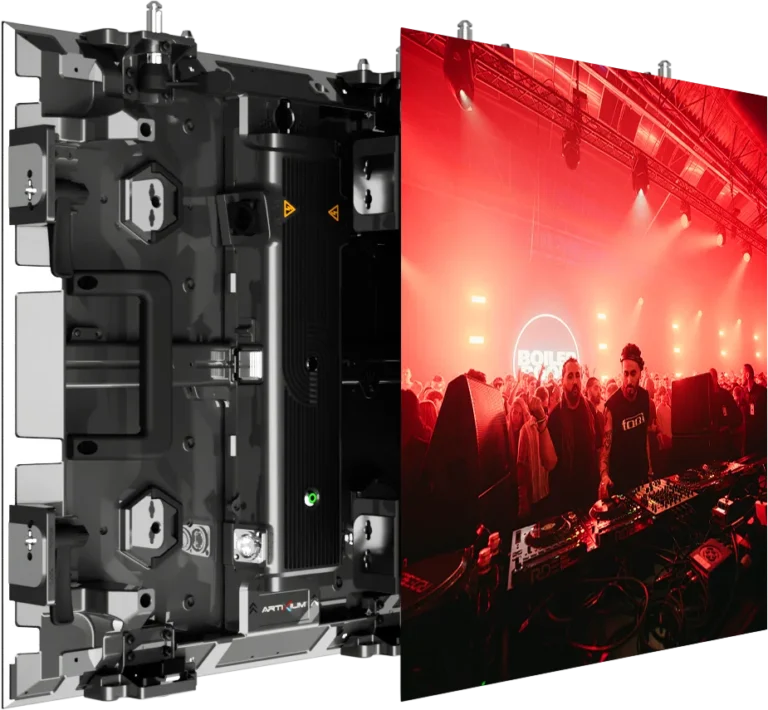
On an XR stage, the LED wall, sometimes with an LED floor, extends the virtual set rendered in real time. Products from the XR/VP range, such as Beryl XR, are built for this kind of shoot.
We build LED for every kind of production
Artixium supplies LED walls to film studios, broadcasters, production agencies and film schools: sets where the screen is filmed as much as it is watched.
Film and series
The set is filmed, not keyed in: the screen lights the scene too.
TV studios
News, shows and streaming: a set that changes without moving the crew.
Built for the camera
We specify for the camera before the eye: colour fidelity, refresh rate and scan have to suit the sensor, with no banding or moiré in the rushes.
XR events
An audience in the room and one at a distance, with images only the camera sees.
Integrated into the set
An integrator from our network connects the wall to the render engine and camera tracking; the production supplies the virtual sets.
Schools and university studios
Students trained in virtual production on professional equipment.
Fixed or touring
And the wall follows the set’s rhythm: permanently installed in a studio, or taken down between shoots.
Why shoots are moving from green screen to LED
Both put a set behind the cast. Only the LED display is already in the image when the camera rolls.
Criterion
Green screen
LED wall
The set is filmed, not keyed in
Green screen
The set arrives in post: keying, green spill cleaned off skin and hair, then compositing.
LED wall
The set is in the camera as it rolls. What is approved at the monitor is what comes out.
The light comes from the set
Green screen
That light has to be recreated, and it never quite matches.
LED wall
The wall lights the scene: reflections on bodywork, the colour of a sunset on a face, the glow of a tunnel.
Crew and cast see the set
Green screen
The cast plays against a green cloth. Decisions are made three weeks later.
LED wall
The director frames inside the final set and the cast plays in it. Decisions are made on the floor.
Need advice ?
Our broadcast studio LED wall projects
Why choose Artixium for a broadcast studio LED wall?
We manufacture the LED screens for your stage and coordinate the integration through our network of integrators, from choosing the pixel pitch to the first shoot.
Direct from the manufacturer
We design and manufacture the LED screens. An integrator from our network handles the structure, cabling and video chain, with one technical contact at Artixium for the screen.
Colour calibration is a service in its own right: on request, on new cabinets or on a wall already installed, in our workshops near Lyon or on site.
Easy to integrate into your video chain
The Beryl XR and Boron 2 XR run on Brompton processing as standard, and other screens in our range can be adapted for XR on request. The integrator receives the technical data needed to connect them.
Support over time
France-based technical support, spare parts and a warranty of up to 5 years: we remain your contact for the screen long after delivery.
Our broadcast studio LED wall products
Visit our showroom
- Plan your visit
Configure your LED screen
- Configure my screen
Tell us about your studio
Volume, backdrop or set piece: send the camera distances and the frame rates you shoot at.
Frequently asked questions
Why does refresh rate matter on a studio wall?
A camera sees much faster than the eye. If the screen does not refresh fast enough, stripes appear in the picture. Our studio screens refresh 7,680 times per second, so the picture stays clean whether you shoot standard cinema or slow motion.
How close can talent stand to the wall?
Very close, if the screen is fine enough. The tighter the light points, the closer the camera can get without seeing them. We choose the screen’s sharpness based on your tightest planned shot, not on the size of the wall.
Does it work with our existing pipeline?
Yes. Our screens connect to standard studio video equipment and work with the most widely used software, such as Unreal Engine, disguise and Pixotope. We check everything with your teams before the first shoot.
Will the cabinets be audible on set?
No. Our studio screens have no fans, so there is no noise or vibration to disturb sound recording.
What pixel pitch does an LED volume need?
It all depends on the distance between the wall and the closest camera, and on the lenses you use. The screen must be fine enough that its light points do not show up on camera. We work it out from your stage plan and your equipment.
How do you avoid moire on camera?
Moiré is the unwanted pattern that appears when a camera films a screen. You avoid it by adjusting the screen’s sharpness, the distance, the refresh speed and the settings. We do the setup on site with your own cameras.
How long does a studio installation take?
For a permanent studio wall, allow a few weeks between delivery and handover: assembly, connection, then colour adjustment. Camera tests cannot be rushed: they are what guarantee good footage.
Can we use an LED volume for a single production?
Yes, but not directly from us. Artixium manufactures the screens and sells them to studios, installers and rental companies. For a one-off shoot, a partner in our network provides the stage and crew. For a permanent studio, we build it with a partner installer.
What is the difference between an XR studio and a broadcast set?
On a TV set, the wall shows images behind the presenter, with no link to the camera. In an XR studio, the set moves with the camera so the perspective stays natural, as if you were filming a real place. A TV set mainly needs reliability and deep blacks. An XR studio also needs the screen, the camera and the computer to be in perfect sync.
What is ICVFX?
ICVFX (in-camera visual effects) means showing the set on an LED wall during the shoot instead of adding it later in editing. The set is already in the picture: that is the difference between a virtual production studio and a simple LED backdrop.
Does a studio wall need GOB?
GOB is a resin that protects LEDs from knocks. The Beryl XR uses another technique: four LEDs grouped in one small protected package. They stay protected and each LED can still be repaired on its own, which GOB makes almost impossible. If your stage is often set up and taken down, ask us to compare the two.