By the Artixium technical team · Updated 16 October 2026
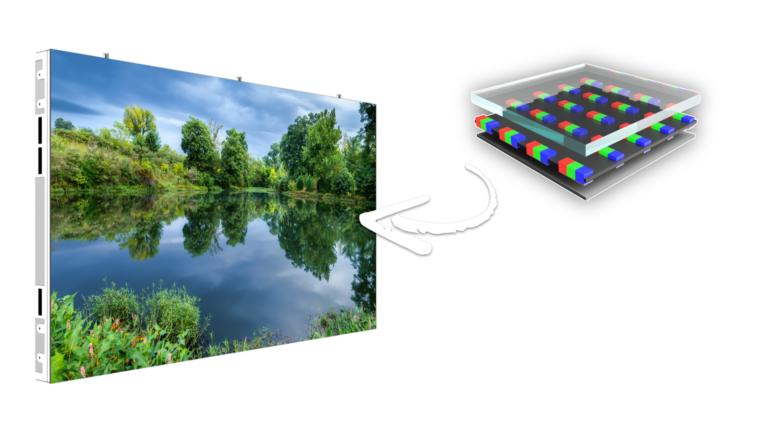
COB LED technology (Chip-on-Board) places bare LED chips directly on the circuit board, then covers them with one continuous layer of resin. It allows pixel pitches below 1 mm and a tougher surface than SMD, which is why it is now a common choice for fine-pitch indoor LED screens.
How Does COB LED Technology Differ From SMD?
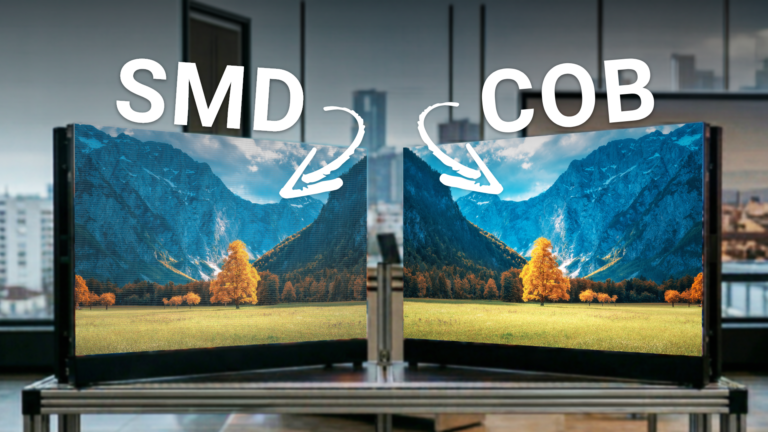
For years, professional LED displays relied on SMD. Each LED is a small packaged component, soldered onto the board afterwards. As the pixel pitch shrinks, these components sit closer together and become more fragile.
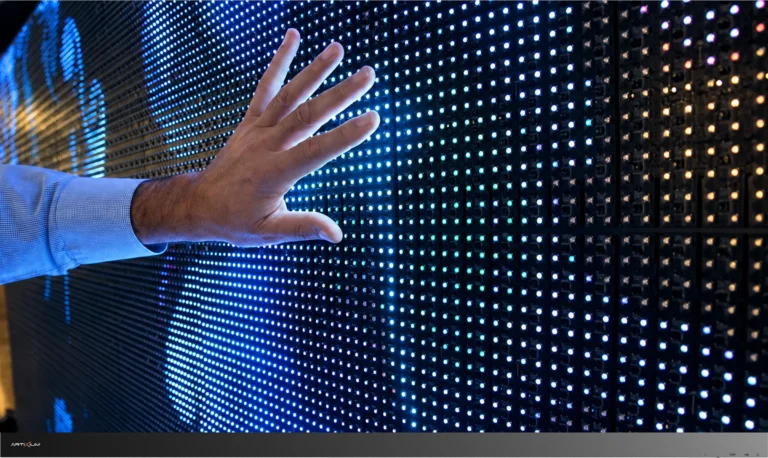
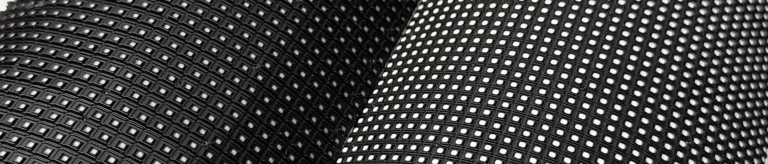
COB works differently: the chips are placed bare on the printed circuit board (PCB), then covered with a uniform resin. There is no protruding component left to knock off.
The result is a smooth, even surface. It allows pixel pitches below 1 mm and makes the screen more reliable.
What Are the Benefits of COB LED Technology?
The gain goes beyond how the screen looks. Here is what COB changes in practice.
Fewer dead pixels: below 5 PPM, up to ten times fewer than SMD.
Higher contrast, up to 20,000:1, with deeper blacks.
A 170° viewing angle, useful when part of the audience sits to the side.
Lower power use, up to 30% less at the same brightness.
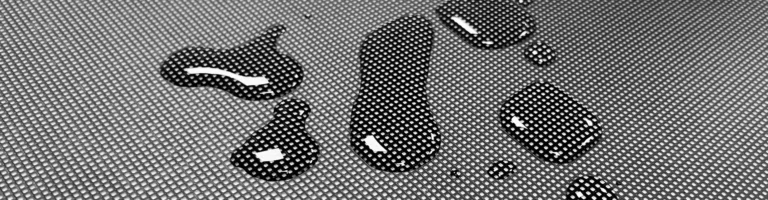
An IP65 front, sealed against knocks, dust and moisture.
Easy cleaning with a damp cloth.
COB or SMD: What Do the Figures Say?
Reliability: standard for SMD, below 5 PPM for COB.
Contrast: about 5,000:1 for SMD, 15,000 to 20,000:1 for COB.
Front protection: IP20 to IP40 for SMD, IP65 for COB.
Viewing angle: 140° for SMD, 170° for COB.
Power use: 20% to 30% lower for COB.
Surface: fragile for SMD, smooth and tough for COB.
Where Does COB LED Technology Make a Difference?
Broadcast studios, control rooms and high-end meeting rooms need a fine image viewed up close. That is where COB brings the most.
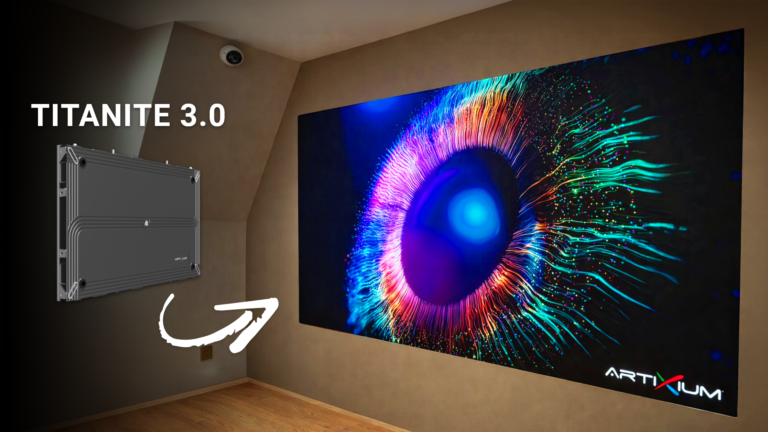
Our Titanite 3 is one example. With pixel pitches from P0.6 to P1.5, it reaches 4K and 8K resolutions on compact surfaces. Its native 16:9 format, front maintenance and IP65 front make it easier to fit into an existing room.
Should You Choose COB LED Technology?
For an indoor screen viewed up close, usually yes: COB LED technology gives a finer image and stands up better to knocks. For a large screen seen from far away, with a wider pixel pitch, SMD remains a valid and often cheaper option. We can compare both with you for your project.
Frequently asked questions
What is the difference between COB and GOB?
GOB (Glue on Board) starts from standard SMD LEDs and adds a protective glue on top. In COB, the chips are bare from the start and the resin is part of the module. Both protect the surface, but COB reaches the finest pixel pitches more easily.
Is COB LED technology suitable for outdoor use?
It is mostly used indoors, with fine pixel pitches. Outdoors, screens are viewed from further away and manufacturers tend to use other options, such as flip chip LEDs in SMD packages.
Can a COB screen be repaired?
Yes, but not like an SMD screen. Replacing a single LED under the resin is tricky, so the affected module is usually swapped. Our LED screen repair service handles this kind of job.
Does COB LED technology have drawbacks?
It costs more than SMD at the same pixel pitch. Modules from different batches can also show slight colour differences, which a calibration corrects.
Where does the term Chip-on-Board come from?
From electronics in general: the chip is mounted straight onto the board, with no individual package. Wikipedia describes the process on its Chip on board page.