By the Artixium technical team · Updated 16 October 2026
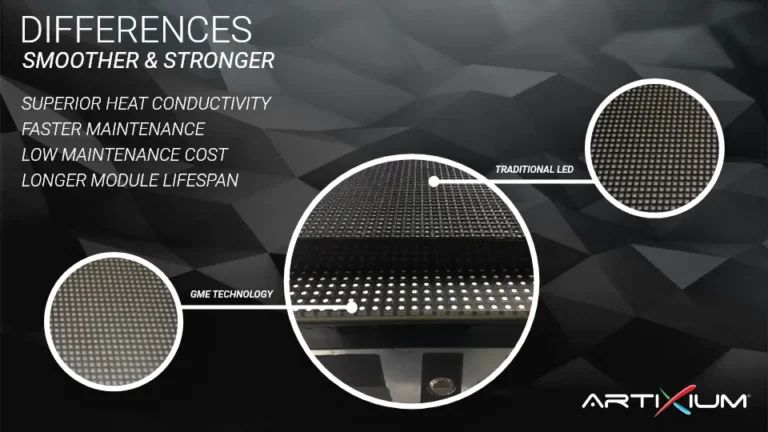
GME technology (Global Module Encapsulation) protects an SMD LED module under a layer of transparent epoxy glue, applied across its whole surface. It is also known as GOB, for Glue On Board. The LEDs remain standard SMD components, but they are no longer exposed to knocks, dust or moisture.
What Does GME Technology Protect?
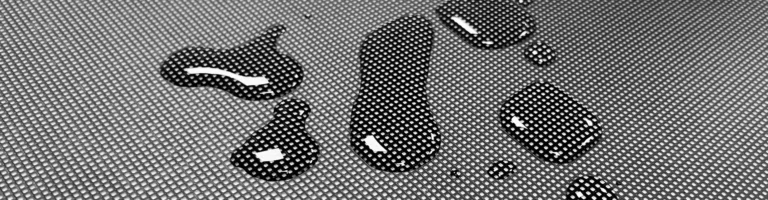
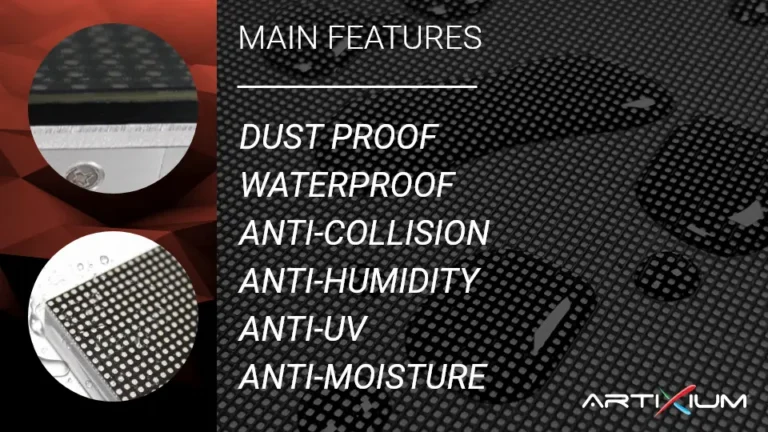
The glue layer protects the LEDs against knocks, dust, water, moisture and UV. It is transparent and does not reduce the screen brightness. It also helps draw heat away from the module, which spares the components over time.
You mostly find it on fine-pitch screens and rental LED panels. In both cases the LEDs are exposed: packed tightly together on a fine-pitch screen, handled at every set-up on a rental screen.

GME Technology or COB: Which One to Choose?
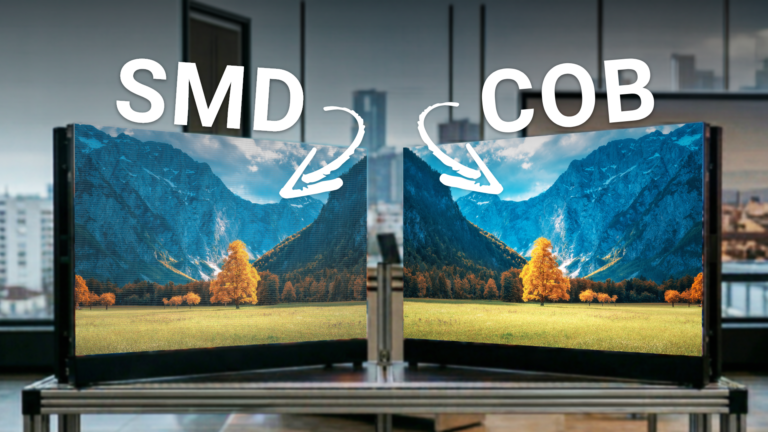
Both protect the LED surface, but not in the same way. With GME technology, the glue covers SMD LEDs that are already soldered, so a damaged module is simpler to repair and cheaper to maintain. The viewing angle reaches 180° both horizontally and vertically. In COB, the chips are bare under the resin, which allows finer pixel pitches. Our guide to COB LED technology covers that second process.
How Can You Tell a Screen Uses GME Technology?
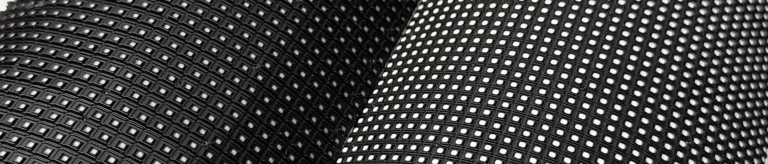
Look closely at the surface of a module. On a bare SMD module, each LED forms a small bump. With GME encapsulation, the surface is smooth and glossy, almost varnished, and you can no longer feel the components.
The datasheet usually says so, under the names GME, GOB or encapsulation. If in doubt, ask the manufacturer whether the layer is applied at the factory over the whole module or offered as an option.
What Should You Check Before Buying?
Good encapsulation stays clear over time and does not turn yellow under UV. Ask how the glue was tested, and whether an encapsulated module can be repaired or only replaced. The answer weighs on the maintenance cost of the screen for its whole service life.
Frequently asked questions
Are GME and GOB the same thing?
In practice, yes. GOB (Glue On Board) is the more common term, while GME (Global Module Encapsulation) stresses that the whole module is covered. Both mean a transparent glue applied over SMD LEDs.
Is GME technology enough for an outdoor screen?
It adds useful protection, but how watertight an outdoor screen is depends mainly on its IP rating, which covers the cabinet and the rear too. Our guide to the IP rating of an LED screen explains how to read it.
Does the GME layer reduce brightness?
No. The glue is transparent and the screen keeps the brightness stated on its datasheet.
Can a GME module be repaired?
Yes. The LEDs are still SMD components under the glue, so an equipped workshop can remove the protection locally, change the LED and reapply the glue. It is simpler than with COB. Our LED screen repair service handles it.
What is an SMD LED?
It is a packaged LED soldered onto the surface of the circuit board. Wikipedia explains surface-mount technology.