Mobile LED screen trailer: giant LED impact, ready to move
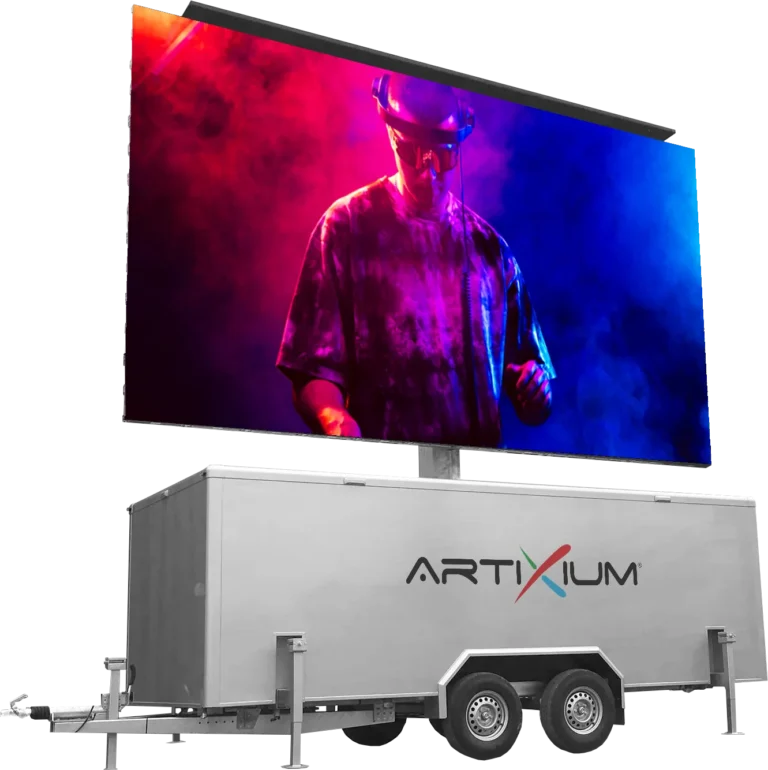
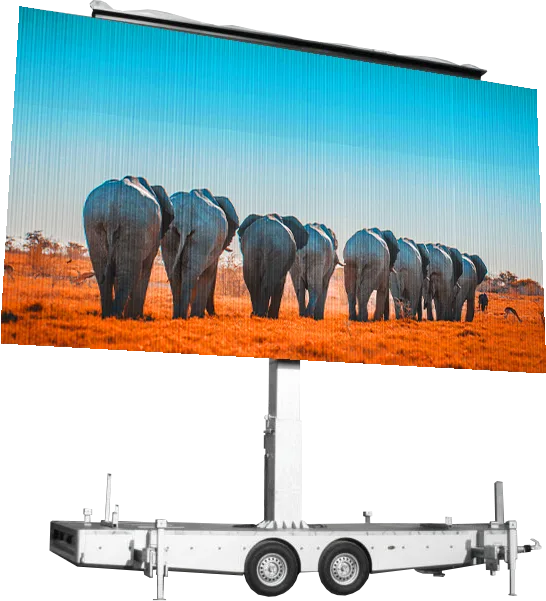
The LED Trailer is a mobile LED screen trailer that moves and sets up very quickly. It is mostly used for temporary outdoor events: festivals, races, drive-in cinemas or mobile advertising campaigns. With its telescopic mast and folding structure, it delivers a screen the size of a permanent installation.
LED Trailer
Features
Deployable Trailer System
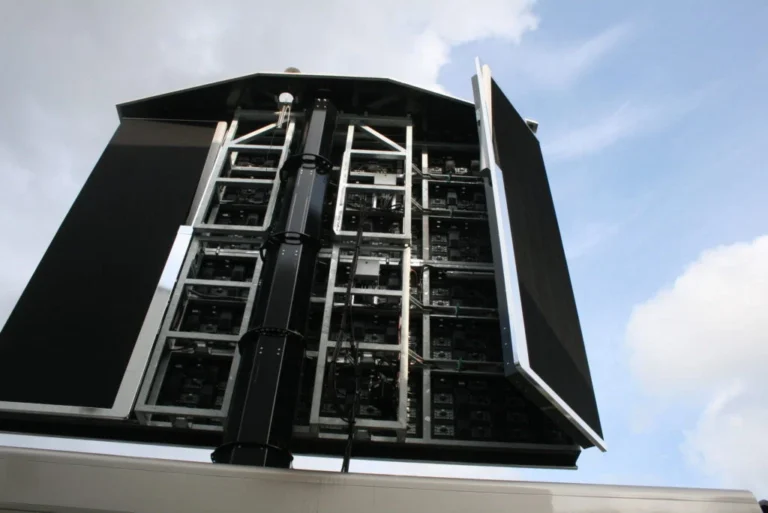
The mobile LED screen trailer is engineered as a fully deployable giant LED screen system, allowing a large-format outdoor display to be transported and installed rapidly for temporary events. Its dedicated trailer structure, telescopic mast and folding screen mechanism work together to move the LED display safely between locations and deploy it once on site.
This architecture makes the system particularly suitable for festivals, races, outdoor events, temporary drive-in cinemas and mobile advertising campaigns, where fast setup and relocation are essential. Depending on the selected version, the range can support display surfaces from compact mobile formats up to significantly larger screens comparable in scale to permanent installations.

Cobalt LED Cabinets
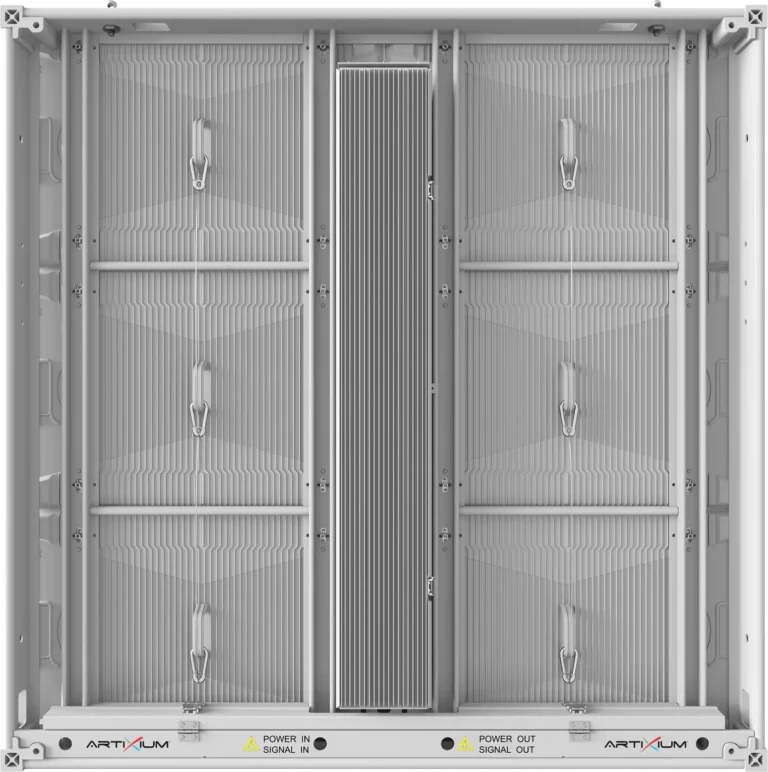
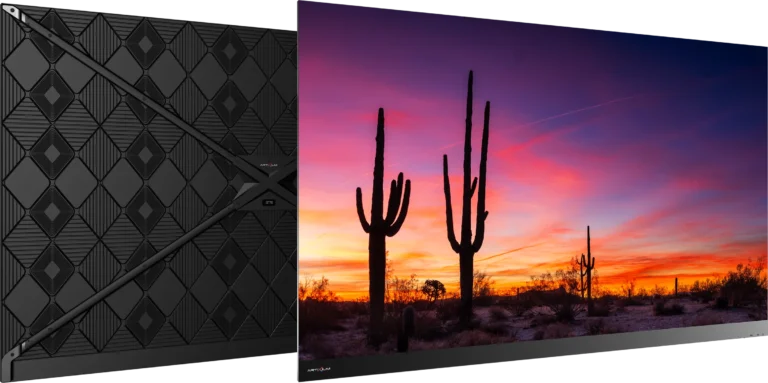
The mobile LED screen trailer uses Cobalt outdoor LED cabinets, combining the brightness, protection and mechanical properties required for mobile outdoor operation. Available in P6.6 and P8 pixel pitches, the cabinets are optimized for medium- and long-distance viewing while delivering brightness of up to 10,000 nits for strong visibility in daylight. Their die-cast aluminum construction also keeps the LED structure sufficiently slim and manageable for the trailer’s deployment mechanism. By integrating Cobalt cabinets directly into the mobile platform, the system combines large-scale visual impact with an LED architecture specifically suited to repeated transport and outdoor use.
IP68 Protection
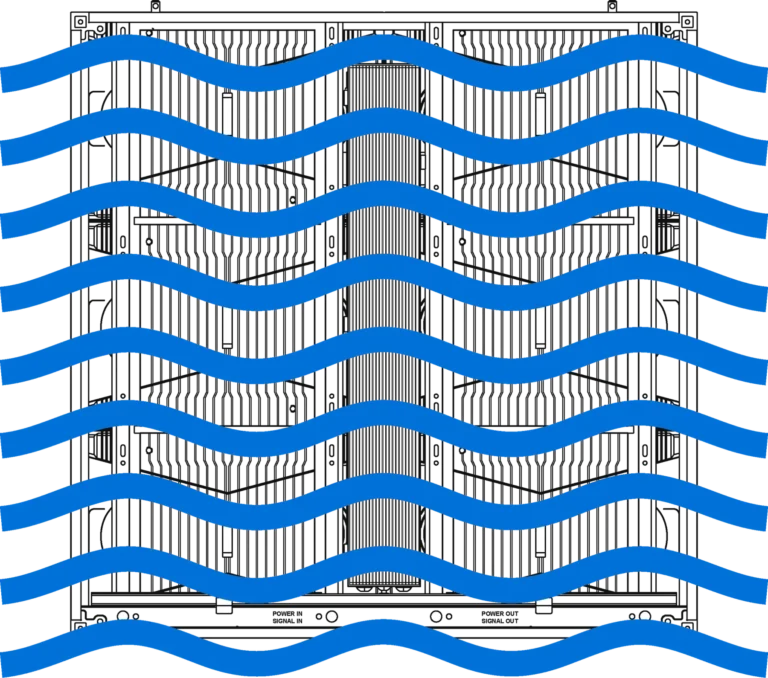
The LED system features IP68 ingress protection, providing a high level of resistance against both water and dust during outdoor operation. This protection is particularly important for mobile installations that may be exposed to changing weather conditions across different venues and events. The range is also designed with additional rain protection around the deployed screen, helping maintain reliable operation when weather conditions deteriorate. With its outdoor-rated Cobalt cabinets, the mobile LED screen trailer keeps working in tough conditions where an indoor or lightly protected display would not cope.
High Resilience
The mobile LED screen trailer is built to handle the strain of large outdoor screens exposed to wind and changing weather. The LED cabinets, mast, support structure and trailer chassis are engineered as a complete system to protect the integrity of the deployed screen. This is particularly important because a raised LED wall creates a large surface area that can be subjected to significant wind pressure during outdoor use. The structural design therefore focuses on maintaining screen stability and protecting the installation throughout temporary events, repeated deployments and changing environmental conditions.
Multiple Screen Sizes
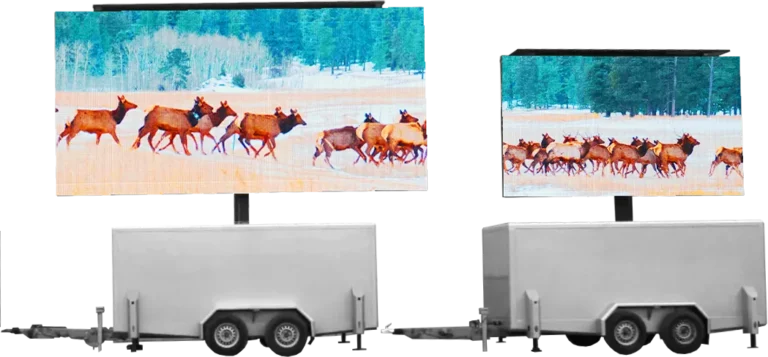
The mobile LED screen trailer range comes in several screen sizes to suit different event scales and mobility needs. The OPEN TRAILER provides a 7,680 × 3,840 mm LED surface, while the CLOSED TRAILER uses a 5,760 × 2,880 mm display. For more compact applications, the CLOSED TRAILER MINI reduces the screen to 2,880 × 1,920 mm. Operators can pick the right balance between visual impact, transport and available space, with the same outdoor LED technology across every trailer size.
Front & Rear Maintenance
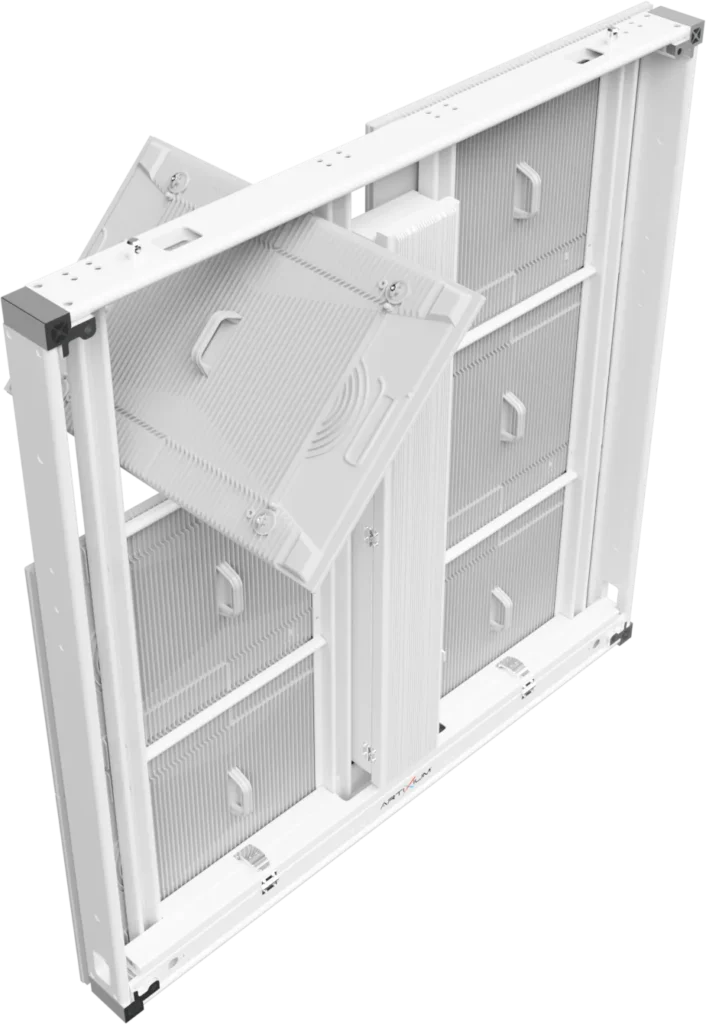
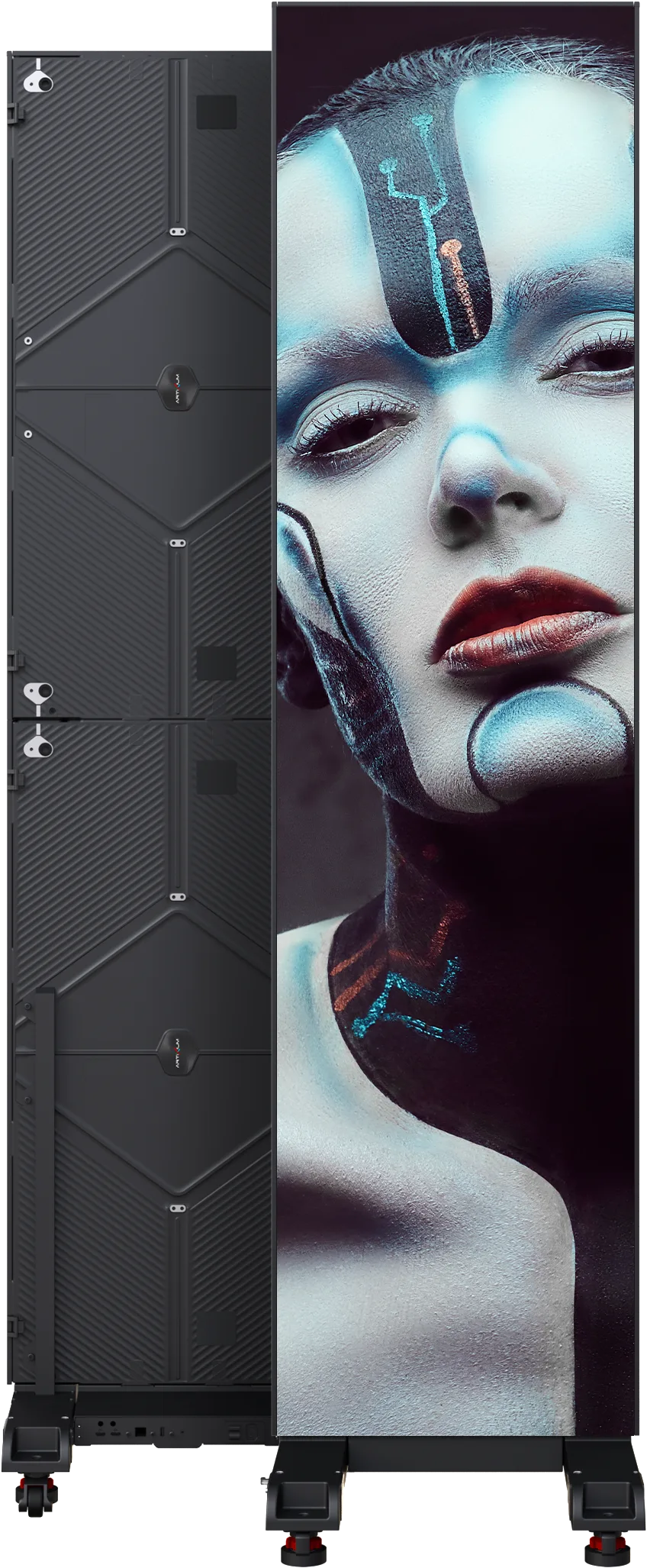
The Cobalt cabinets used throughout the mobile LED screen trailer range support maintenance from both the front and the rear, giving technicians greater flexibility when servicing the screen. This dual-access architecture is particularly useful on a mobile platform, where access conditions can vary depending on how the trailer is deployed or positioned on site. Components can therefore be reached from the most practical side without requiring the complete screen structure to be dismantled. This helps simplify routine servicing and reduces intervention time during temporary events where technical downtime needs to remain as limited as possible.